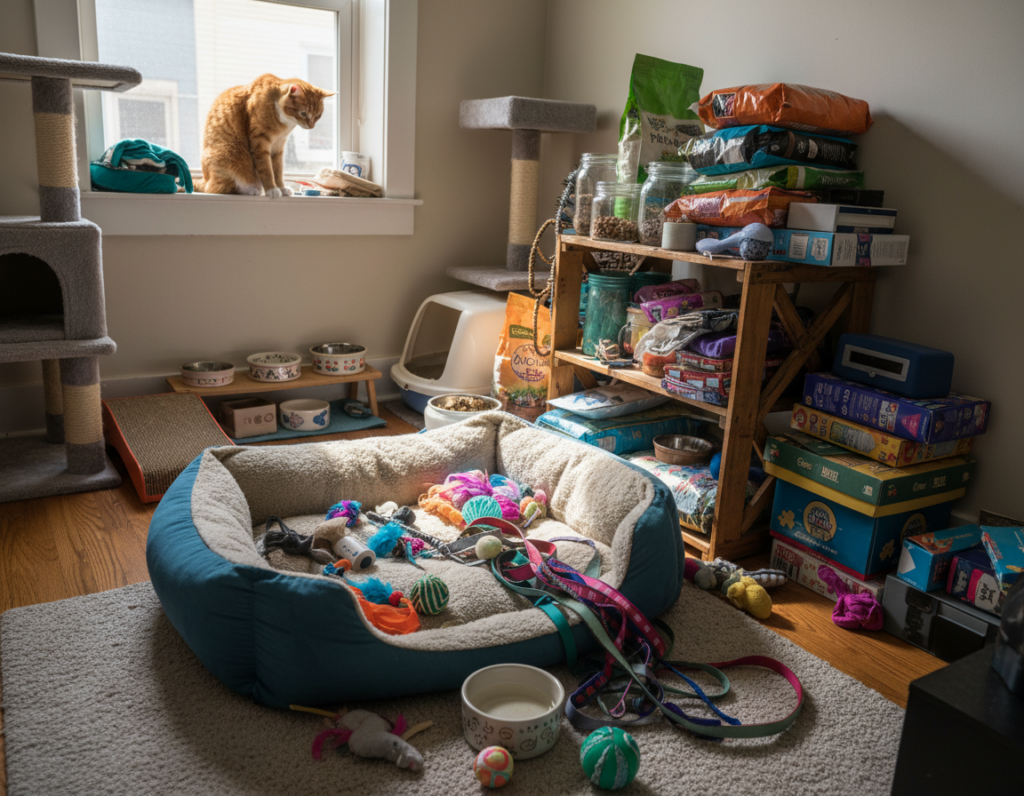
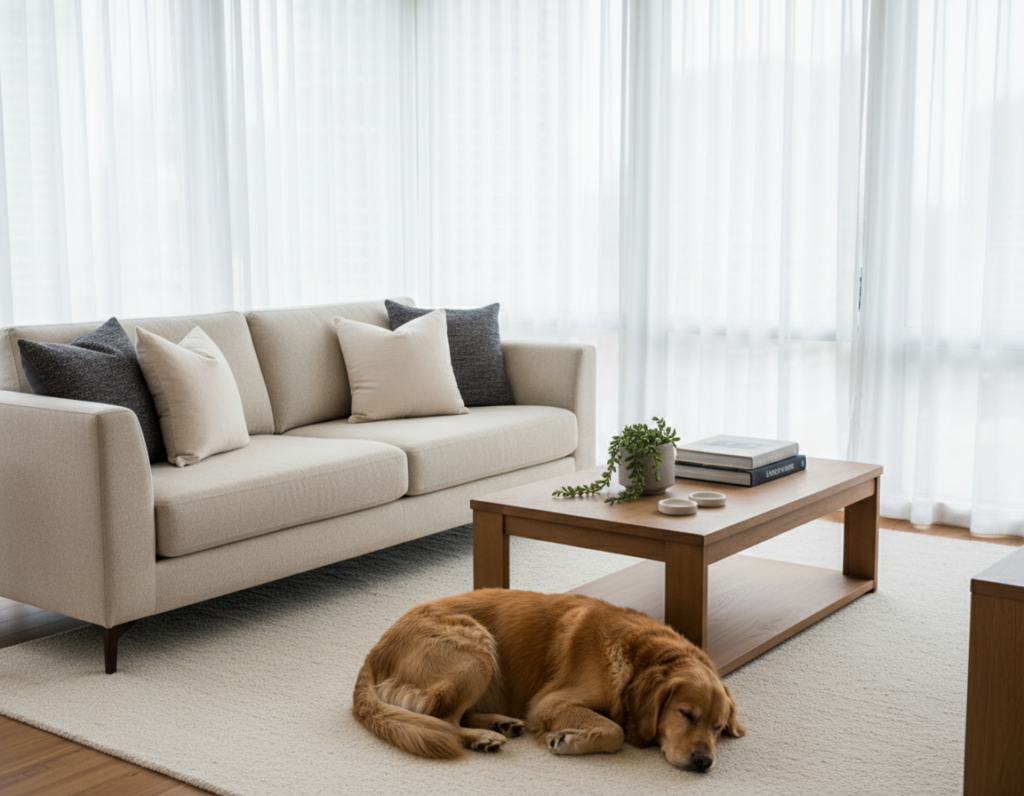
Smart cabinet solutions help homeowners keep a tidy home while making supplies easy to reach. Marie Kondo reminds readers that organizing pet belongings does not need Martha Stewart-level skill. Simple systems save time and reduce daily stress.
Whether someone owns a dog or a cat, managing food bags and accessories works best with a clear plan. Using cabinet space in the kitchen or laundry room creates a neat feeding station and frees up living room space. This approach keeps items like food, grooming tools, and bags out of sight but within reach.
Professional organizers such as Jen Robin stress that an efficient system makes a home more functional. A few minutes of organization today will save time tomorrow and keep pet supplies orderly. These small changes make a big difference in daily routines.
Assessing Your Pet Supply Inventory
Start by gathering every supply into one visible spot. This step helps owners see quantities and spot duplicates.
Marie Kondo recommends grouping by type rather than location. That means clustering food, toys, grooming tools, and bowls together.
Categorizing by Type
Lay items out on the floor to compare what is used often and what is not. Visual sorting makes decisions faster and saves time.
- Food and feeding gear
- Toys and chews
- Grooming and health accessories
- Leashes, collars, and travel items
The Keep or Toss Process
“Donate or toss any accessories that have not been used in the past year.”
Invite the animal to interact with toys to test interest. Keep a running list of what needs restocking, as Jen Robin suggests.
- Be honest about what to keep.
- Donate usable items your dog ignores.
- Label the final place for each item to support lasting pet organization.
Smart Hidden Pet Storage Ideas for Every Room
A room-focused plan makes it simple to place food, toys, and grooming gear where they belong. This approach keeps the home orderly and cuts time spent searching for supplies.
Laundry room as a hub: Designers such as Jen Robin use the laundry room to store essentials. A shallow drawer holds toys while a cabinet keeps food and grooming supplies out of sight.
Entry and mudroom tricks: Ashley Murphy recommends leashes near the door. Hooks or a small table provide a quick place for collars, treats, and a grab-and-go bag for walks.
Use a dedicated cabinet or sofa table to corral cat and dog items in living areas. Boxes or a drawer keep treats and brushes hidden but accessible.
- Place frequently used items where they are needed most.
- Install wall hooks or door organizers to free up floor space.
- Choose one centralized room or room-specific spots so every item has a set place.
Utilizing Cabinetry for Feeding Stations
Designing a cabinet-based feeding nook makes daily meals smoother and the kitchen neater. A compact plan keeps bowls and food off the floor and reduces spills.
Built-in island bowls are a modern solution that frees floor space and creates a permanent feeding station.
Built-in Island Bowls
Many contemporary kitchens now integrate bowls directly into island cabinetry. This setup tucks bowls away when not in use and supports a clean counter and table surface.
Benefit: It saves space and offers a seamless look that fits family life and busy routines.
Pull-out Drawer Solutions
Pull-out drawers with recessed bowls make mealtime faster and cleaner. Owners can slide the drawer, fill bowls, then hide the feeding area when the meal ends.
Store extra pet food and treats in a nearby cabinet or on a side table. Marie Kondo recommends Stasher Bags for easy, washable pet food storage when items must travel.
“A designated feeding station prevents mess and keeps daily routines efficient.”
- Create a dedicated cabinet zone for bowls and supplies.
- Use pull-out drawers to contain mess and simplify cleaning.
- Keep Stasher Bags handy for fresh kibble and grab-and-go treats.
Creative Ways to Conceal Pet Food Bags
A smart move is to keep oversized food sacks out of the kitchen and in a climate-controlled area. This protects kibble from humidity and pests while freeing up main living space.
Garage and shed storage works well for bulky bags when these spaces stay dry. Owners should place bags on raised shelving or pallets to avoid floor moisture.
Use airtight containers and durable bins to lock out pests and preserve freshness. A cabinet or dedicated bin inside the garage is a neat, accessible solution for large supplies.
In the laundry room, woven boxes make a stylish way to hide lint rollers, gloves, and poop bags out of sight. Decorative boxes keep the room tidy and make supplies easy to grab.
“Store large bags away from the kitchen and choose sealed containers to protect food quality.”
- Store large bags in a garage or shed to free kitchen space.
- Seal containers tightly to guard against pests and humidity.
- Use decorative boxes in the laundry room to conceal small items.
- Choose durable bins and a cabinet or raised shelf to keep bags off the floor.
Tip: Moving food to a secondary room creates more usable space for the family and the dog, while keeping supplies safe year-round.
Organizing Grooming Essentials in Portable Caddies
A portable caddy turns scattered shampoos and brushes into one grab-and-go kit. This approach speeds up bath time and keeps grooming supplies tidy.
Small wire baskets work especially well as portable caddies. They are waterproof, ventilated, and can hold soaps, shampoos, and brushes without trapping moisture.
Keeping grooming items together means they are ready when a dog needs a bath. Owners can carry the caddy from bathroom to yard with ease.
- Use a durable caddy to keep essentials organized and easy to move.
- Wire baskets dry quickly and prevent mildew on brushes and towels.
- Tuck the caddy under a sink or inside a cabinet to save space when not in use.
Tip: Label the handle or side so everyone in the household knows where to find grooming tools. A single, portable kit helps maintain a steady pet grooming routine and saves time.
Maximizing Vertical Space with Wall Storage
Adding shelves and over-the-door pockets transforms unused wall space into a tidy holding area.
Installing simple shelving or hanging baskets clears floor clutter and makes supplies visible. This approach creates a focused zone in a mudroom or laundry room. It helps the household stay organized and speeds up daily routines.
Over-the-Door Organizers
Over-the-door organizers are an effective way to save floor space and keep items off the ground. They work well for leashes, treats, or small bags of kibble. A slim pocket system fits behind a closet or utility door and keeps things accessible.
- Use wall shelves or hanging baskets to hold toys and grooming tools.
- Move gear to the wall to open up space in the room and reduce clutter.
- This vertical plan is ideal for a dog owner with limited floor area.
- Install hooks and baskets so pet supplies stay within reach but out of the way.
Implementing Drawer Organizers for Small Items
A tidy drawer can transform scattered grooming tools and treats into a fast, reliable routine. Using simple dividers keeps brushes, combs, and small bags of kibble in clear compartments.
Designate one drawer for pet grooming essentials so every brush and shampoo has its own slot. A second drawer or section can hold travel leashes, small first-aid items, and one or two food pouches for outings.
- Use adjustable dividers to fit different sized items.
- Separate treats from grooming tools to avoid crumbs and mix-ups.
- Keep a small caddy for quick transfers to bathroom or car.
Benefit: Drawer organizers keep small goods out of sight while maintaining an efficient storage system. This method works well in kitchens, laundry rooms, or a dedicated care station. For a practical example, see a well-styled doggy drawer setup.
Using Decorative Bins for Toy Management
A well-chosen basket can turn messy playthings into a neat, attractive corner. Decorative bins keep toys organized while blending with home decor. This approach frees up floor space and makes rooms feel calmer.
Selecting Wipeable Materials
Choose wipeable materials for any bin that may hold food or treats. Vinyl, coated canvas, or waterproof-lined baskets clean quickly and resist stains.
This makes handling pet food and messy items easier and keeps the kitchen or laundry area fresh.
Low-Profile Baskets
Low-profile baskets slide under a console table or TV stand. They let a dog or cat reach toys without cluttering the room.
Frisco’s collapsible basket weave dog toy bin is a smart, stylish example. It stores playthings neatly and folds flat when not needed.
- Decorative bins keep toys accessible and reduce visual clutter.
- Wipeable bins protect against spills from food or treats.
- Teach a dog to return toys to the basket to build tidy habits.
Labeling Systems for Efficient Access
Clear labeling turns a cluttered cabinet into a simple, fast-access command center for daily care. Marie Kondo and Ashley Murphy both stress that labels keep track of where pet items live.
Use broad category names like “pet care,” “walks,” or “feeding station” so labels stay useful as needs change. Place labels on boxes, shelves, and the inside of a door or on a wall by the feeding area.
Labels at the feeding station make clearing bowls and storing food quick and consistent. This reduces mistakes during busy mornings and helps sitters follow routine.
“Labeling your storage boxes and bins creates a fool-proof system that helps anyone in the home find supplies quickly.”
- Mark boxes for food, treats, bowls, and grooming items.
- Label the cabinet or shelf and the inside of the door for fast access.
- Use broad names so the system adapts as supplies or routines change.
Benefit: A labeled system saves time and keeps the whole household aligned on where supplies belong. It makes pet organization practical for everyone.
Maintaining Your Pet Organization System
A simple weekly check keeps supplies current and prevents last-minute runs to the store.
They should update a running supply list and note when food, bowls, or treats run low. This habit helps manage pet food and prevents expired items from lingering.
Keep supplies out of sight but reachable by placing essentials in a single cabinet or basket near the feeding station. Consistency is the best way to maintain a tidy home and save time each day.
- Review and refresh the supply list weekly.
- Inspect food bags and canned food for freshness.
- Wipe and re-arrange bowls and the feeding area monthly.
- Replace worn toys and check that travel supplies are ready.
Tip: A well-kept system means less searching and more time enjoying a dog or cat. Staying committed to this small routine ensures the room, table, and cabinet stay orderly over the long term.
Conclusion
Good habits and a few well-placed containers cut the time spent searching for supplies. A clear plan makes daily care faster and less stressful.
They should designate a single feeding station and use cabinets, bins, or a small caddy so essentials stay within reach. Label zones to keep the system working for everyone in the home.
Implementing these storage solutions and spending a little time each week to tidy will pay off. Start with one drawer or shelf, and build the system room by room to see quick gains in order and ease.