Keeping a tidy area for animals can cut daily stress and save time. The IRIS USA storage combo (30 lbs and 11 lbs) makes food handling simple. Marie Kondo reminds owners that any effort should spark joy for both the owner and the animal.
Experts advise practical habits. Jen Robin recommends a running list for recurring purchases so items never run out. Ashley Murphy suggests storing leashes in the mudroom for quick grabs before a walk.
Using existing household containers is a fast start. A central hub in the home keeps toys, food, grooming tools, and other things off counters and easy to find. This method saves minutes each morning and makes routines smoother.
Want more ideas for turning unused rooms into useful areas? See this guide for creative conversions and safety tips: ideas for turning unused spaces into comfortable pet.
Preparing to Organize Pet Supplies in a Small Space
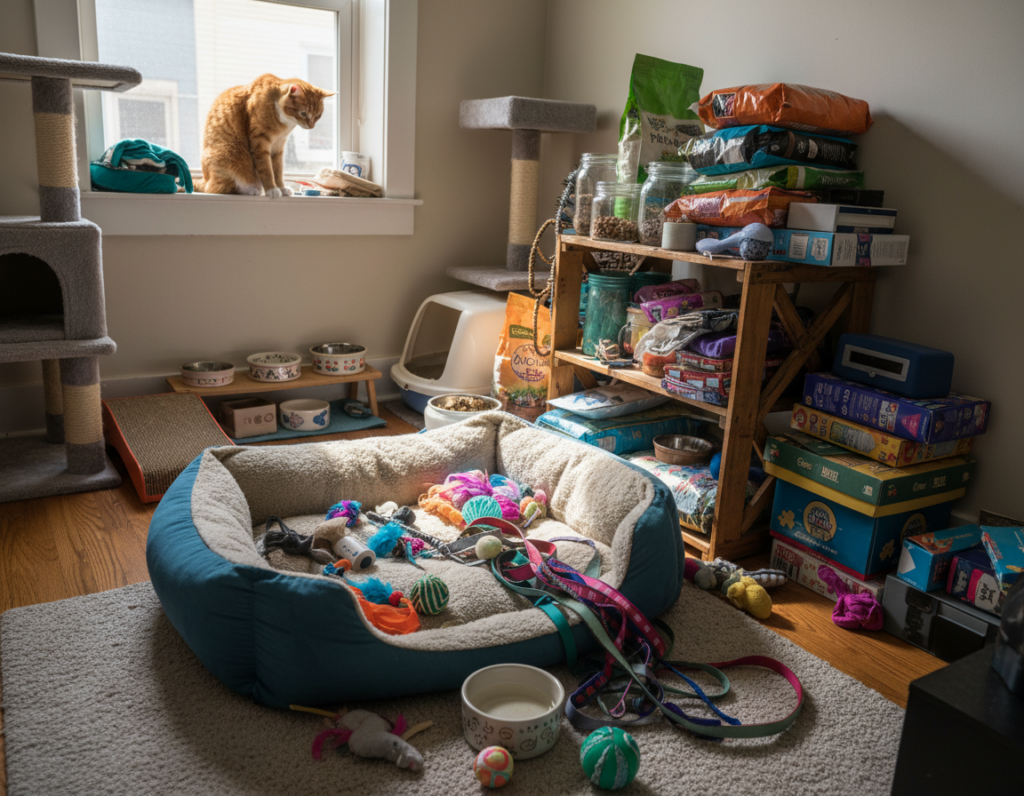
Begin with a single sweep: bring all dog and cat gear together to see what you really own. This step makes it easy to count items and spot duplicates.
Marie Kondo recommends gathering all pet supplies into one area to categorize them by type rather than location.
They should make a simple plan before moving things into a closet or laundry room. Jen Robin also advises keeping a running list to track what to restock for a dog or cat. Ashley Murphy suggests donating accessories not used in the past year to a local shelter.
Practical steps save time:
- Evaluate how much storage and room are available.
- Sort by type so you can see how many multiples you own.
- Create a clear plan to prevent clutter in the home over time.
With a quick inventory, he or she will know what to keep and what to donate. This way, organizing items becomes a repeatable system that frees up time and keeps essentials handy.
Sorting and Decluttering Your Pet Items
A focused sorting session makes it simple to decide what stays and what moves on.
Categorizing by Type
They should clear a table in the kitchen and group items into piles: toys, food, grooming, and bedding.
Using a laundry basket to collect things from the floor gives a clear view of total volume. A dedicated toy storage bin or woven basket keeps dog toys accessible during playtime.
Group like toys together to spot favorites. This way they see what the animal actually uses and what is redundant.
Deciding What to Keep or Donate
“Have your pet interact with items to see if they truly spark joy.”
Items that are broken, worn-out, or expired belong in the trash to keep the home clutter-free.
If a toy or blanket is still good but unused, donating to a local shelter helps other animals.
- Sort on the kitchen table for better visibility.
- Use a bin for toys and a basket for quick pickups.
- Keep only essentials to save time and make routines easier.
Establishing a Centralized Pet Hub
Creating a single hub helps keep the most-used gear within easy reach and reduces clutter around the home.
Selecting the Best Location
Choose a spot near daily activity. A cabinet above where dog food is stored offers quick access to food and bowls. Placing a shelf in the laundry room works well for grooming items and other supplies, as Jen Robin recommends.
For walking gear, a place close to an exterior door makes morning exits faster. If someone has both a dog and a cat, consider separate hubs so each animal’s items stay organized.
- Keep food storage containers near the kitchen or feeding area to prevent pests.
- Designate a closet shelf or cabinet for brushes, leashes, and pet food.
- Use a clear container or labeled shelf so everyone can find things quickly.
“A well-planned hub will help keep your home tidy by ensuring every item has a designated home.”
For more setup tips, see this short guide on making a dedicated spot: central hub ideas.
Creative Storage Solutions for Tight Quarters
Maximizing storage in tight rooms starts with creative reuse of what is already in the home.
Repurposing Household Containers
They can use kitchen jars, clear bins, and the IRIS USA 30 lbs and 11 lbs combo as a reliable food storage container for dog food or bulk pet food. Stackable bins inside a cabinet keep things accessible without buying new furniture.
Using Drawer Organizers
Drawer organizers work well for grooming tools, treats, and spare collars. Small sections help find items fast and save time each morning.
Tip: Use washable bags for travel and portioned treats to keep freshness and reduce spills.
Storing Under Furniture
A storage bench or low bin under a sofa is a genius way to hide a toy storage bin or seasonal bags. Frisco’s collapsible basket weave dog toy bin offers style and function for the living room.
“Repurposing what you already own is the easiest way to test a new hub system.”
- Use stackable bins in a kitchen cabinet for easy access.
- Keep a dedicated toy storage bin to help keep things off the floor.
- Try drawer inserts to store small items neatly.
For more tips on maximizing compact rooms, see this guide on maximizing small spaces.
Utilizing Vertical Space and Wall Mounts
Walls offer untapped vertical storage that keeps floors clear and items within reach. Using hooks, shelves, and mounted bins turns an entryway or mudroom into a functional station.
Try specific mounts: the PET ARTIST Dog Leash Holder has five hooks, which is ideal for hanging leashes, collars, and dog toys. The Lwenki Wall Key Holder adds a 13.7-inch shelf for containers, bags, or food jars. IKEA Bastis 2 black hooks provide a budget-friendly option for quick hangs.
Install a wall-mounted storage bin to hold extra bags and small toys. Hanging baskets or a slim shelf keep things like treat containers and a toy storage bin off the floor. This approach keeps the dog toy collection neat and easy to access.
“Wall mounts are an essential tool for any owner looking to maximize storage in a tight living area.”
- Use hooks for leashes and dog toy rotation.
- Choose a shelf for heavier containers and food jars.
- Pick a shallow storage bin for small stuff near the door.
Implementing a Labeling System for Efficiency
A simple labeling plan saves time and takes the guesswork out of daily care.
Use clear, bold tags so family members and sitters know exactly where things go. Marie Kondo recommends labeling bins and shelves to make habits stick. Ashley Murphy says broad category labels like “pet care” keep a system flexible as needs change.
- Big labels: use large text on containers and the top shelf for quick reads.
- Temporary test labels: index cards let someone trial a layout before buying permanent tags.
- Clear container notes: even see-through bins should have a label to note contents like food or toys.
- Group broadly: one bin for dog leashes and one for grooming keeps related items together.
- Extras: label bags and small boxes to reduce searching and save time each day.
Labels act as a constant reminder of where to find and store items.
Take a few minutes now and the system will keep the home tidy for the long term.
Maintaining Your New Organizational System
A five-minute tidy each evening keeps the new system working and prevents clutter from growing. This habit helps return items to their designated home and makes morning routines smoother.
Simple steps that stick
They should keep a basket by the back door for toys and leashes so the dog’s playthings get dropped into one place fast.
Checking food storage weekly ensures pet food and dog food stay fresh and that supplies are reordered before they run low.
- Put things all the way away: make it a rule to return items after each use.
- Assign spaces: give each animal its own shelf or bin when multiple pets share the home.
- Prep lists: keep a short checklist for grooming or meds so the right items are ready.
“A consistent system for pet items will help keep your laundry room or mudroom tidy and save time.”
In short: daily, small actions are the easiest way to maintain order. They help keep pet routines calm and make the system last.
Conclusion
A brief set of routines will make daily care smoother and keep belongings easy to find. They can adopt small habits that cut time and reduce stress. Clear labels and a central hub make fetches and feedings faster.
By following advice from experts like Marie Kondo, they can create a system that sparks joy for both owner and animal. Regular tidies keep things usable and let the family find needed supplies at a glance.
In the end, a well-maintained hub keeps essential items in one spot and preserves a calmer home. These simple steps save time and help everyone enjoy more relaxed routines.