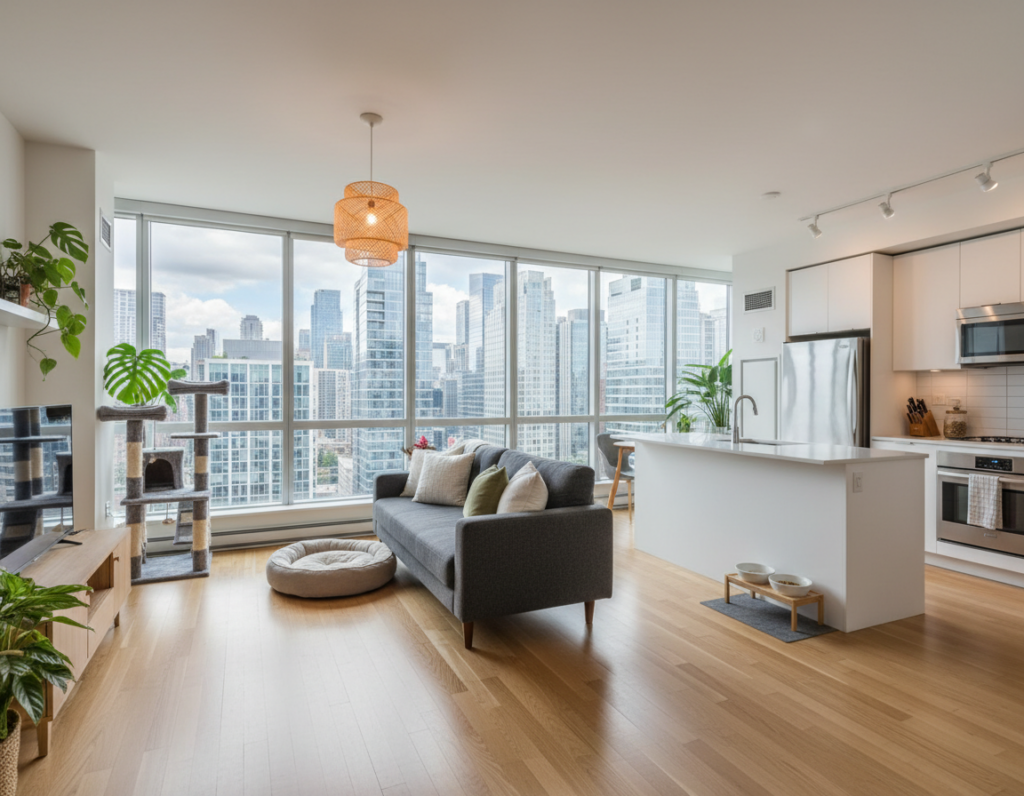
Povison designs pieces that ease life in busy homes. Their fully assembled options reduce delivery stress and keep the space calm for cats and dogs. This approach blends reliable design with practical choices for everyday living.
The Beige Corduroy Modular Sofa uses vertical ridges to resist claw snags and cut static that attracts fur. The Hobart Modern Oval Dining Table has a sintered stone top that stands up to scratches and spills.
The Mid Century Modern TV Stand hides cords behind slatted doors to protect curious pets. Removable covers and high-performance fabrics make cleaning easier and help fight stains, hair, and odors.
Choose pieces that balance style and long-term wear. With smart finishes, machine-washable covers, and sturdy construction, a living space can stay beautiful and calm while living with cats and dogs.
Understanding the Needs of Pet Households
People who share homes with animals need materials that resist wear without sacrificing style. Choosing the right pieces helps a family keep a clean, calm living space and saves time on upkeep.
Many households look for scratch-resistant surfaces and finishes that repel hair. Modern performance fabrics clean repeatedly without losing color or texture. Leather also performs well against stains and odors when sealed and cleaned properly.
Successful coexistence combines smart selection with training. Establishing boundaries and offering appealing alternatives reduces damage and improves life for people and animals alike.
- Balance style and function: pick pieces that fit daily routines.
- Know your animal: match material choices to behavior and activity levels.
- Prioritize easy care: stain-resistant fabric and simple cleaning systems cut chores.
Essential Material Characteristics for Durable Furniture for Pet Owners
High-performance finishes and tightly woven fabrics give pieces a better chance against regular wear from active pets. Scratch-resistant surfaces and stain-repellent textiles are the two most important features when choosing items for a busy home.
Scratch-Resistant Surfaces
Hardwood frames with rounded edges hold up far better than soft woods like pine. Metal, tempered glass, or wood finished with protective coatings will hide small scratches and keep a tabletop looking cleaner over time.
Stain-Resistant Fabrics
Microfiber and treated polyester repel liquids and odors, so a sofa stays fresher longer. The Sophia Feather Modular Reclining Sofa uses a tight-weave surface that limits hair and claw snags.
“Choosing machine-washable, removable covers gives owners a fast way to tackle accidents and pet hair without special tools.”
Solid construction also matters. The Harbor Accent Chair shows how engineered wood and high-density foam resist everyday wear while keeping comfort. Avoid silk and wool; they tear or snag easily from scratching.
- Tip: designate pet areas to protect main pieces and extend life.
- Tip: prioritize removable covers and tight weaves in sofas and chairs.
Selecting the Right Fabric for Your Sofa
Choosing the proper fabric matters when a household shares space with animals. A well-chosen textile keeps a sofa looking good and makes daily cleaning easier.
Performance velvet offers a tight weave that resists stains and repels liquids. It is an excellent option for a cat household because it reduces snags and stands up to light scratching.
Performance Velvet and Woven Textures
Woven options like Devon or Bennett bring texture and hide wear while staying soft under paws. Microsuede adds a velvety feel and resists spills and claw marks.
- Look for: removable covers that can be machine washed to cut cleaning time.
- Material note: the Oliver Wall-Hugger Motion Reclining Sectional uses 100% polyester to prevent hair from embedding.
- Support: firm cushions hold shape better and reduce sag after repeated use.
Always check the cleaning code—“W” signals easy water-based care. For more recommendations on upholstery choices, see best upholstery choices.
Why Surface Finishes Matter for Longevity
Surface finishes act like a shield, protecting everyday pieces from scratches, spills, and embedded hair. A textured or distressed finish will hide small marks and keep a room looking lived-in without losing style.
Choose finishes that match your materials. Waxed or oiled “character” leather often masks claw marks better than glossy, uniform leather. Similarly, performance fabrics and treated velvet can repel liquids and stop fur from embedding into the weave.
The Aurora Power Swivel Glider Recliner shows how eco-conscious finishes help a family keep a healthier living space. It uses OEKO-TEX STANDARD 100 certified materials to lower indoor chemical exposure while still resisting wear from lively pets.
“Regular wiping and quick spot cleaning prevent buildup of hair and food stains that speed material breakdown.”
- Distressed surfaces conceal scratches and scuffs in busy homes.
- A quality finish on a table or sofa guards against stains and odors.
- Removable covers and protective coatings speed cleanup and extend life.
Benefits of Modular Furniture Designs
Modular seating lets families reconfigure a room to match pets’ favorite sunbeams and nap spots. This flexibility keeps a living area functional and stylish as needs change.
The Kenna, Delaney, and Ohana modular sofa collections make it easy to create a sunny perch for a cat or a cozy corner for a dog. Sections detach so a single worn piece can be replaced rather than swapping the whole set.
Separating modules also simplifies cleaning beneath and around seating, which helps manage hair and dust. Many models use performance fabrics and treated fabric or leather that handle daily wear in busy homes.
“Replacing one section saves money and extends the life of the whole layout.”
- Adaptable design: rearrange pieces as pets grow or routines shift.
- Easy maintenance: removable covers and lightweight modules speed cleaning.
- Smart investment: modular sofas protect decor while keeping the family comfortable.
Incorporating Hidden Pet Spaces
Integrating small retreats into main pieces keeps pets close while preserving a clean look. Ottomans that double as beds or end tables with cubbies give a private spot without extra clutter.
Entertainment centers with built-in crates hide gear and create a secure nook next to the TV. These designs help pets feel part of the living area without bulky add-ons.
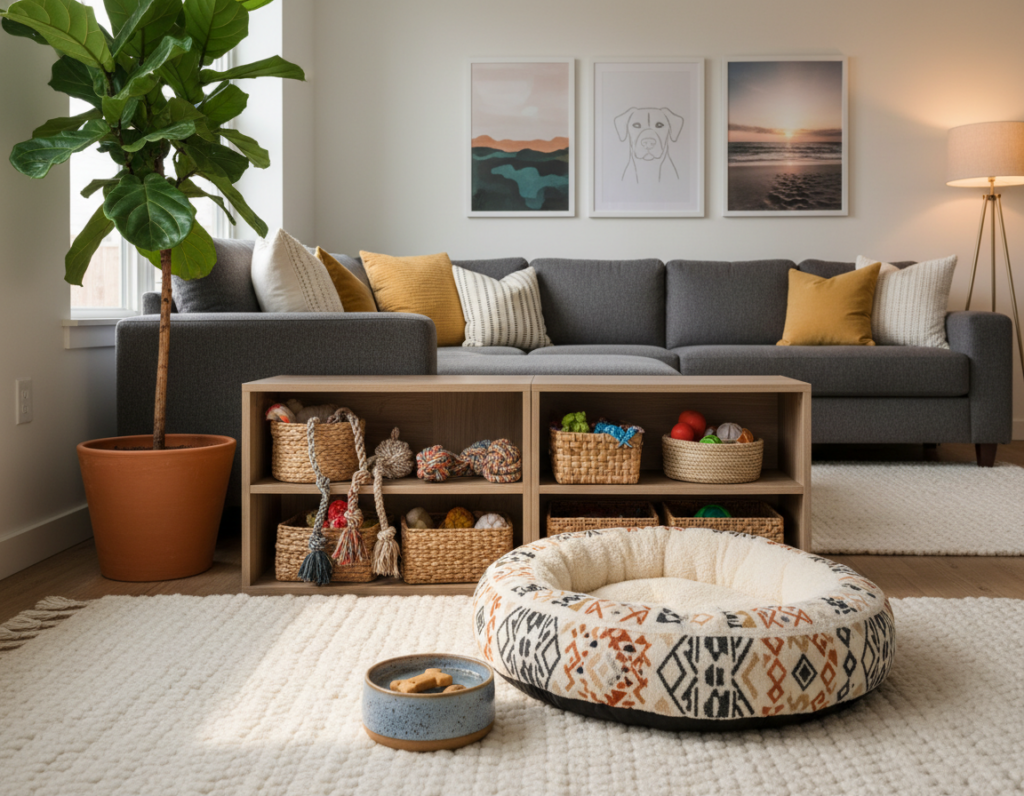
Hidden spaces work especially well in busy homes where a cat prefers a quiet nap spot during the day. They also reduce the urge to scratch the main sofa by offering an attractive alternative.
“Dual-purpose pieces keep a room organized while putting pets at ease.”
- Keep style intact: choose integrated beds that match your room design.
- Save floor space: ottomans and media units hide beds without crowding a home.
- Protect key pieces: a dedicated spot encourages pets to use their own beds rather than the leather sofa.
Strategic Placement and Furniture Height
Placing seating and tables with care changes how pets move through a room and how much wear surfaces see. A thoughtful layout helps keep pathways clear and limits spots where animals might launch onto a sofa or table.
Raised Legs for Cleaning
Elevated legs with 4–5 inches of clearance let a broom or robot vacuum reach beneath pieces. This makes it easier to remove hair and crumbs that gather under seating.
Open space below seating also creates an airy feel in the room and speeds up routine cleaning without heavy lifting.
Stability and Weight
Low-set sofas with shorter legs tend to be steadier when a dog or cat jumps on and off. Heavy construction and a solid base reduce tipping and wobble.
Place larger pieces away from high-traffic areas to limit wear. A stable table or bench near doorways keeps fragile items out of harm’s way and protects upholstery and leather finishes.
“Every detail, from leg height to placement, improves safety and the long-term usability of a home.”
- Raised legs ease cleaning under seating.
- Shorter legs increase sofa stability during play.
- Sturdy construction resists energy from active pets.
Training Pets to Respect Your Home Decor
Clear rules and steady routines make it easier to keep prized pieces looking like new. Consistency matters: use the same short cues such as “off” or “no” every time a pet approaches off-limits sofas or tables.
Setting Clear Boundaries
All family members must follow the same commands to avoid confusing the animal. A predictable plan speeds learning and reduces unwanted behavior around leather or velvet seating.
Offering Appealing Alternatives
Place comfortable beds and posts near favored spots so a cat or dog chooses its own area. Machine-washable covers on a modular sofa give a transition layer while training continues.
Redirecting Unwanted Behavior
Use gentle deterrents like double-sided tape or a mild citrus spray as temporary cues to keep paws off key pieces. Reward positive choices with praise or treats; positive reinforcement beats punishment every time.
“Patience and consistency protect style and preserve the quality of fabrics, leather, and other materials in a busy living space.”
- Tip: keep scratching posts by furniture to protect upholstery.
- Tip: use short, consistent commands and family-wide rules.
- Tip: combine training with protective covers to cut stains and wear.
Conclusion
In short, smart choices in construction and textiles make daily upkeep easier and keep a living area welcoming. Investing in quality pieces helps protect main seating while keeping style intact.
Removable covers, raised legs, and hidden nooks offer practical benefits that save time and reduce wear. Consistent training and positive reinforcement teach animals to respect boundaries and support long-term care.
With thoughtful selection and patience, a household can enjoy a clean, functional, and attractive space that works for everyone. Small, deliberate changes pay off over years of daily life.