Simple routines make a big difference in how a household manages clutter. Marie Kondo advises sorting by category so owners truly see what they own. Using clear categories helps them decide what to keep and what to let go.
Jen Robin of Life in Jeneral recommends keeping a running list to track restocks. This small habit prevents last-minute searches and saves time when leaving the house. A focused approach to organizing can turn chaotic corners into usable space.
Consistency matters. Designating spots for bowls, leashes, and treats means items are easy to find. For a busy household with a dog, these habits are the easiest way to protect calm and order each day.
Assessing Your Current Pet Supply Inventory
Gathering all items in a single place reveals how much is actually stored around the home.
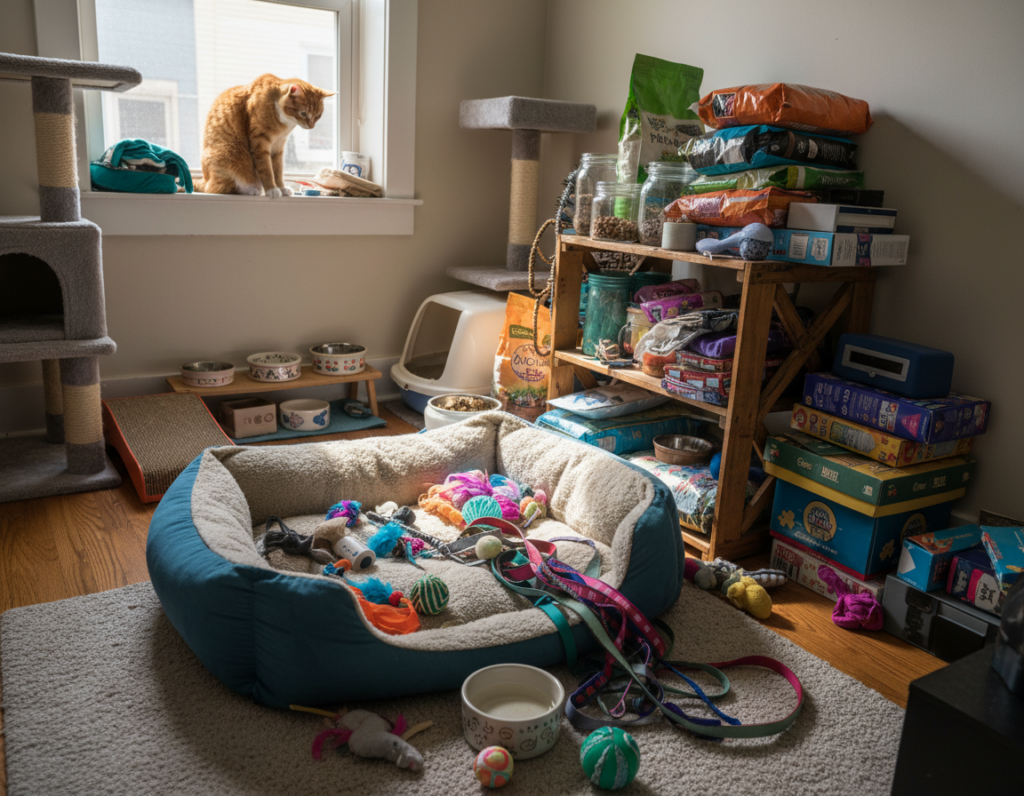
Start with a visible pile. Bring bowls, leashes, toys, food, and other essentials into one spot. This makes duplicates and expired food easy to spot.
Sort by type, not by room. Marie Kondo advises grouping like with like so owners can see patterns in what they buy and use.
“Gather every item to see the bigger picture of what you buy and how often.”
Make a simple inventory list. Write down categories and counts. A clear list saves time when restocking and prevents last-minute searches.
- Gather supplies into one central location to assess total volume.
- Identify duplicates of dog toys or extra pet food when sorted by type.
- Donate accessories unused for over a year, as Ashley Murphy recommends.
Taking this short, methodical step ensures only the things that matter stay. Once categorized, daily management of pet food and essentials becomes much easier.
Effective Pet Organization Tips for Every Room
Using vertical surfaces and door-mounted systems frees floor space and reduces stress. Small changes in each room make daily routines smoother. The goal is to keep essential items visible and reachable.
Utilizing Vertical Wall Space
Wall hooks and a narrow shelf create instant storage without taking up floor area. Hang leashes, a leash, and bags on hooks so they are easy to grab before a walk.
A wall-mounted shelf in the kitchen holds toys, treats, and a small bin for daily supplies. A decorative basket on that shelf keeps a dog’s favorite toy contained and tidy.
Maximizing Closet and Door Storage
Horderly recommends an Elfa back-of-door system in a front closet for treats, baggies, and booties. It keeps pet items sorted and accessible without cluttering shelves.
If door space is limited, use bins on shelves and add hooks for leashes. Store food in a designated spot near the kitchen so all things have a consistent place and the room stays orderly.
- Quick grab: Hooks for the leash by the entry save time.
- Containment: Baskets and bins keep stuff from spreading across a room.
- Visibility: Wall shelves make daily essentials easy to find.
Categorizing Items for Better Accessibility
Create distinct categories so every essential has a predictable place in the home.
Categorize by use: group food, toys, medications, and daily accessories. This simple step makes it faster to find things when leaving the house or feeding a dog.
Make a short list of categories and keep it near storage spots. Jen Robin of Life in Jeneral notes that seeing all belongings in one space helps decide what to keep and what to remove.
“Categorizing items like food, toys, and accessories helps you make informed decisions about what to keep.”
Benefits at a glance:
- Better access to pet supplies and daily gear.
- Less time hunting for a leash or medication before a walk with the dog.
- More usable space because similar items stay together.
Keeping categories fresh is an easy way to maintain order. Over time, this approach saves time and keeps pets’ essentials ready when needed.
Selecting the Right Storage Containers and Bins
A few well-chosen storage containers can transform cluttered corners into usable space. Choosing the right pieces helps keep food, toys, and small items organized and easy to find.
Choosing Baskets for Toys
Low, soft baskets work best for dog playthings. Marie Kondo recommends a soft bin so a dog can pull out a toy without help.
Place a basket near the living area or on a low shelf to keep stuff tidy and visible.
Airtight Food Storage Solutions
Airtight containers preserve kibble and keep a kitchen cabinet neat. Horderly notes Vault containers can hold up to 40 lbs of kibble.
Yamazaki options come in three sizes for smaller bags. Use a food storage container to prevent spills and pests.
Drawer Organizers for Small Items
Drawer inserts keep grooming tools, treats, and spare leashes separated. A simple divider makes finding things faster before a walk.
If floor space is tight, choose stackable storage containers or a designated bin so the home stays clutter-free.
For a full guide on practical storage setups, see the guide to pet organization.
Implementing a Centralized Pet Hub System
A single, dedicated hub turns scattered dog items into a tidy, easy-to-use system. Keeping food, leashes, toys, and grooming tools in one spot saves time and reduces clutter across the home.
Choose a room or cabinet that fits daily flow. Jen Robin uses a laundry room as a one-stop shop for food, treats, and grooming supplies. A kitchen closet or mudroom shelf works just as well if it sits near the entry.
Use a storage container or decorative basket by the door so toys and leashes are always within reach. Stackable storage containers and a labeled drawer keep small items like bags and brushes tidy.
- Place a food storage container in a cool, dry cabinet.
- Keep a low basket or bin for the dog’s toy and leash near the entry.
- Consider furniture-style crates (Fable for up to 50 lbs; XL options for larger breeds) to blend function and design.
With one system in place, anyone in the house can find what they need quickly. A centralized hub preserves space and makes daily routines smoother for both people and dogs.
Maintaining Order with Labeling and Daily Habits
Clear labels and simple habits make it easy for everyone to return things to their proper place.
Label storage containers with broad names like “pet care” or “leash” so the system adapts as needs change. Marie Kondo stresses that visible labels help every person in the home know where items belong.
A short checklist for feeding, grooming, and walks keeps routines consistent. Write the steps and tuck the list near the bin or door so tasks are quick and repeatable.
- Make labeling part of storage setup: bins, containers, and shelves.
- Use broad category names to future-proof the system, as Ashley Murphy recommends.
- Put things all the way away each time to stop clutter from spreading into the kitchen or mudroom.
A daily five-minute tidy reduces time spent searching for treats, toys, or leashes. Consistent labeling means even guests can help return items to the right bin.
For more guidance on creating a lasting system and to finalize your storage approach, see this helpful guide: finalize your storage.
Conclusion
Reclaiming floor and shelf space starts with simple systems that anyone can follow.
Small, regular actions—sorting, labeling, and storing—reduce clutter and make the home easier to navigate. These steps save time and keep essentials visible when they are needed.
The most effective system is one that the household can sustain. Consistency ensures a dog’s food, bowls, and gear are ready without last-minute searches.
By committing a few minutes each day and using a central hub or room-based storage, owners can keep supplies tidy and functional. The result is a calmer space and more time for what matters most.