Many owners find that simple edits to the home cut daily stress. Marie Kondo notes that sorting pet belongings helps owners see what they buy and how often. Jen Robin of Life in Jeneral recommends a running list to track supplies that need restocking. These habits save time and clear mental clutter.
Adopting a tidy approach makes a room easier to manage. When food, toys, beds, and grooming tools each have a place, searches end quickly. This keeps the house cleaner and reduces fur on furniture.
Quality over quantity matters. Keeping fewer items that truly work for a dog or cat helps owners focus on care and training. Simple storage and clear routines make life calmer for both pets and people.
Understanding the Philosophy of Minimalist Pet Organization
A clear philosophy helps owners decide which supplies truly belong in the home. This mindset aligns daily choices with the needs of the animal and with the practical demands of living in a shared space.
Defining Minimalism for Pet Owners
Minimalism often means living more with less. For owners, that translates to keeping only items that add real value to a dog or cat’s life. Marie Kondo urges people to lay out everything and notice what sparks joy for the animal.
The Benefits of a Simplified Home
Less clutter saves time. A simplified setup reduces frantic searches for food, toys, or medication. It also helps owners focus on care and meaningful interactions.
- Evaluate which items your dog or cat actively uses each day.
- Prioritize essential food and supplies so systems stay functional.
- A calmer house lets owners spend more time training, playing, and improving life for their pets.
“Lay out all pet items to see what truly sparks joy for your animal.”
Assessing Your Current Pet Belongings
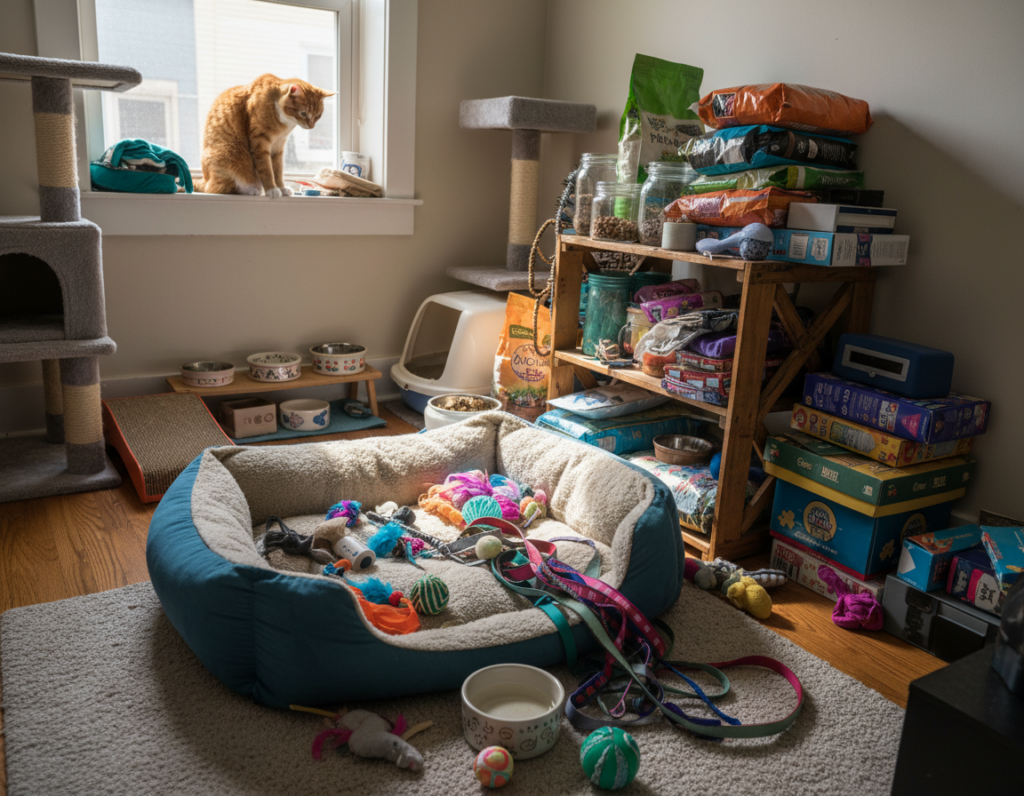
Start by taking stock of every item your dog or cat uses in daily life. Inspect the living room, closet, and any storage bins to list beds, bowls, toys, and furniture pieces.
Ashley Murphy of the NEAT Method recommends removing accessories that have not been used in the past year. This simple rule helps owners stop keeping excess supplies that only take up space.
- Check each bed and piece of furniture to decide if it adds value.
- Count food, leashes, and grooming items to match supply with real need.
- Clear the closet and create one dedicated area for daily essentials.
“Say goodbye to any pet accessories that have not been used in the past year.”
With more than 100 million cats and 90 million dogs in the EU, many households face tight areas and too many items. A careful assessment sets the stage for a calmer, cleaner home and better care for dogs and cats alike.
Sorting Supplies by Category
When supplies are grouped by category, owners spot excess and gaps quickly. Jen Robin recommends sorting by type rather than by room to understand total volume and avoid duplicates.
Start with broad piles: food, toys, grooming, accessories, and waste bags. Lay out each pile and count what you have. This method makes it easy to find extra bags of food or repeated brushes hidden on different shelves.
Deciding What to Keep, Toss, or Donate
Keep items that are used daily or fit your dog or cat comfortably. Toss damaged toys, torn beds, or expired pet food. Donate clean, usable items your pets no longer use.
- Use a collapsible basket, like Frisco’s weave dog toy bin, to contain toys in the living room for easy access.
- Label shelves or bins to save time when restocking food and supplies.
- Involve the animal—watch which toy they choose to help decide what truly matters.
“Sorting by category helps owners keep only the items their pets actually use.”
Selecting Durable and Multi-Functional Pet Gear
Durable, multi-functional items change how owners manage daily pet care. Choosing better materials and tools reduces clutter, saves time, and keeps a living room looking cohesive.
Investing in Quality Materials
Choose solid hardwoods or leather for furniture to resist scratching and staining. Brands like Baongoc Furniture and Johnston Casuals recommend sturdy builds that stand up to a dog’s wear.
A 10 lb Cavapoo owner cut three beds down to one orthopedic bed and a washable crate pad. This switch improved the pup’s comfort and reduced the number of low-quality replacements.
Choosing Multifaceted Items
Multi-use tools save storage and handle more tasks. The Mini Pet Hair Detailer removes stubborn fur from cars, furniture, and clothing with minimal effort.
- One high-quality leash and one waterproof coat simplify training and walks.
- Effective fur removers plus durable waste bags keep the home clean with less work.
- Fewer, better items free up storage and reduce excess toys and supplies.
The Quiet Luxury Appeal
The quiet luxury trend favors fewer, attractive pieces that last. This approach makes sure the home stays stylish while meeting daily care needs for dogs and other pets.
Creating Dedicated Zones for Pet Essentials
Creating a ritual space for meals and a quiet nook for sleep gives a dog predictable comfort and reduces stress.
Place the feeding station near the kitchen so pet food and water are easy to access during meal prep. A fixed spot keeps bowls off high-traffic routes and makes cleaning simple.
Give the dog a calm base camp by choosing a corner for a bed or crate. That area becomes a safe, den-like space that lowers anxiety and supports rest.
Designated storage for treats, leashes, and daily supplies prevents items from migrating across the room. Use one shelf or bin so essentials are always in the same area.
- Keep food and water bowls in the kitchen to streamline feeding.
- Set a single spot for the bed to create routine and comfort.
- Use a labeled box or crate for treats and training gear.
“Consistent feeding spots help maintain routine and simplify care.”
Integrated zones keep the living room clear while giving the dog everything they need. The result is a calmer household and easier daily care.
Implementing Smart Storage Solutions
A well-planned storage system saves minutes each day and prevents last-minute scrambles for supplies. It also keeps daily routines consistent and makes care tasks predictable for every household member.
Utilizing Vertical Space
Use shelves and hanging baskets to free floor area and keep pet food, grooming tools, and bags within reach. Wall-mounted racks above the entry or near the kitchen are ideal for leashes and treats.
Stackable bins and clear shelves let owners see pet items at a glance. This setup works well in a small closet or utility area and keeps the entryway tidy for daily walks.
Labeling for Efficiency
Ashley Murphy recommends labeling bins so anyone can find food, toys, or grooming supplies quickly. Labels remove guesswork and make restocking simple.
- Dedicated closet or shelf: keep accessories, waste bags, and pet food in one area.
- Basket for toys: a single basket keeps the living room tidy while letting the dog access favorite items.
- Furniture with storage: benches or ottomans that hide supplies maximize space and keep rooms neat.
“Labeling bins creates a fool-proof system that anyone in the home can follow.”
Maintaining a Calm and Clutter-Free Environment
A tidy home lowers background noise and visual chaos, which can calm anxious animals. The National Academies Press notes that housing conditions, including noise and clutter, influence stress hormones and behavior.
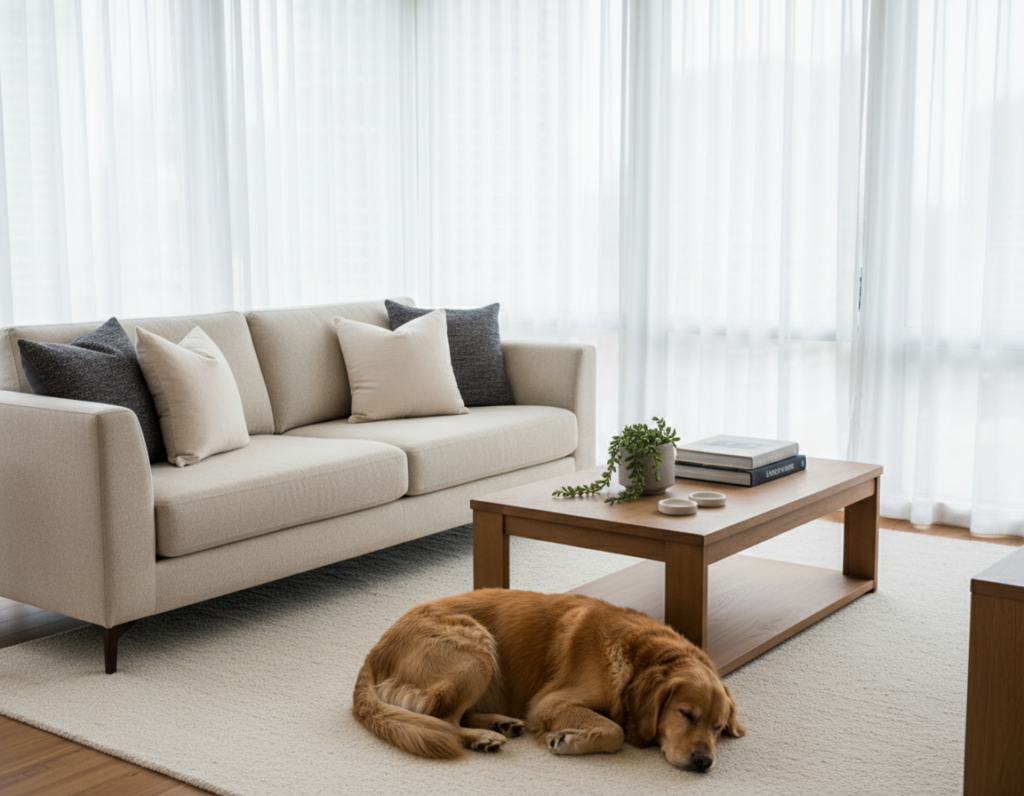
Keeping the living room free of excess furniture and toys creates clear walking paths and fewer hiding spots for fur and mess. One client with a 9 lb rescue terrier reported less pacing and barking after editing the room for minimalism.
Regular cleaning of fur, bedding, and bowls keeps the house healthy for both dogs and cats. A simple routine makes daily care and training easier and saves time.
- Make sure bed and furniture are placed in quiet corners to signal rest time.
- Store toys in one labeled bin so playtime stays organized and brief.
- Keep food and treatment items in a single storage spot to avoid frantic searches.
“A clutter-free house creates a consistent, predictable environment that helps animals feel secure.”
For pet owners, reducing things in shared spaces leads to more relaxed life and better behavior. Less tidying means more time to enjoy training, care, and calm moments with the dog or cat.
Conclusion
, Simple choices about gear and storage cut chores and improve daily life. They free up time for training, walks, and quiet moments with a companion.
By choosing durable items and smart storage, owners reduce clutter and daily interruptions. Clear systems make care faster and the home calmer.
Investing in quality pays off: fewer replacements, less mess, and better comfort for the animal. Taking the time to sort and assess belongings rewards both home and household.
The goal is a living space that supports routine and celebrates life with animals.