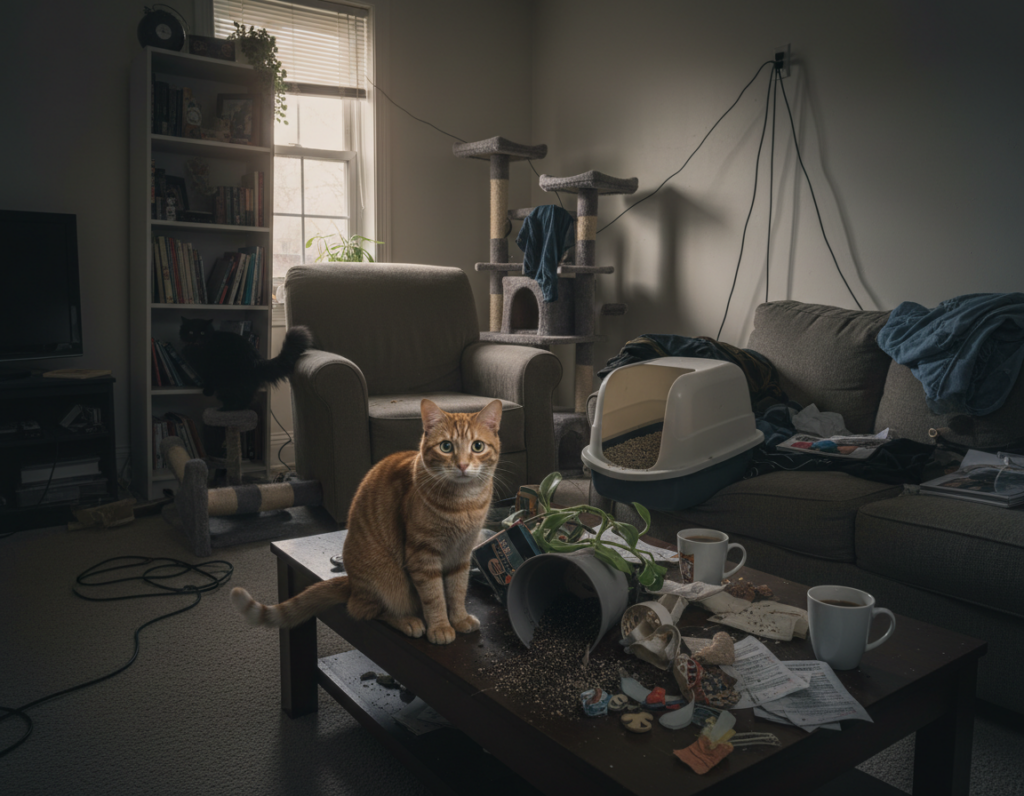
Many owners find it hard to keep a house tidy while living with a cat. Small changes in layout and routine cut the time spent on chores. Experts say a proactive plan for managing fur and dander makes a big difference for any home.
These practical tips focus on creating functional zones that reduce stray hair and mess. By organizing common areas and picking durable surfaces, owners lower daily maintenance and protect fabric and floors.
Consistent routines help both the person and the kitty thrive. Simple habits—regular grooming, zoned storage, and targeted vacuuming—turn a hectic cleaning schedule into a calm, repeatable process. With the right setup, living with cats can feel manageable and welcoming in every house.
Designing an Easy Clean Cat Apartment
Smart spatial planning turns a busy pet household into a manageable living space. For an 800-square-foot home with multiple pets and a 100-pound black lab named Yogi, layout matters.
Designate zones to stop fur and litter from spreading through the house. Place washable bedding in set spots so bedding is simple to launder all year.
- Create a dedicated room or corner for sleeping and toys to contain activity.
- Choose materials that resist hair and wipe down easily during weekly cleaning.
- Position the dog and the cats’ areas apart so each pet has a clear space to rest.
Proper zoning is the foundation of a tidy home. With intent and a few durable choices, daily cleaning becomes faster and less stressful for everyone.
Strategic Zoning for Pet Supplies
Organizing zones for feeding and litter supplies reduces daily mess and keeps traffic patterns predictable. A small, designated station for bowls and another for waste items helps everyone in the home move with purpose.
Dedicated Feeding Areas
Place the cat’s food and water in a low-traffic room or corner to prevent spills from reaching the floor. Keep the dog’s bowl in the kitchen and the kitty’s station in a separate area.
Pro tip: Use a mat under bowls to catch crumbs and make wiping up part of a quick daily cleaning routine.
Containing Litter Zones
Create a single room or closed corner for the litter box and its supplies. Store scoops, liners, and extra litter together so odors and tracking stay confined.
- Reduce tracking: Position the litter box away from main living areas to limit spread across the house.
- Organize supplies: A small cabinet or basket keeps everything accessible for fast maintenance.
- Hygiene benefit: Separating food and litter areas helps prevent cross-contamination in shared spaces.
Managing Litter Box Tracking and Odors
Controlling litter tracking and household odors begins at the box and at the floor beneath it. Managing the litter box is a critical part of maintaining a tidy home because it is the primary source of odors and tracking in any cat-friendly space.
Selecting Effective Litter Mats
Place a high-quality mat at the entrance to trap granules. A good mat reduces the amount of litter carried beyond the immediate area and cuts cleanup time.
Practical routine tips:
- Scoop the litter box once or twice per day to prevent waste buildup and lingering odor.
- Put the box in a dedicated room or corner away from main living areas to contain mess and odors.
- For fresh urine spots, use a mixture of water and a mild cleaning agent to neutralize odor before it sets into fabric or floor.
Consistent maintenance of the litter area is the most effective way to keep the house smelling fresh. Choosing the right mat and sticking to a daily cleaning rhythm protects other areas of the home from tracked litter and lingering smell.
Essential Vacuuming and Air Quality Tactics
Choosing the right suction and filtration tools makes a measurable difference for surfaces and indoor air. This section explains which features matter and how routine habits keep dander and hair from settling into fabrics.
Choosing the Right Pet Vacuum
Invest in a high-performance pet vacuum for frequent cleaning. A portable option like the Black and Decker Dust Buster (about $16) helps remove hair from couches and stairs.
For deep carpet work, experts suggest a model that delivers 150–200 CFM. That airflow range lifts fur and dander from fibers more effectively.
Importance of HEPA Filtration
HEPA filters capture microscopic dander and skin flakes. This keeps the air in a house cleaner and reduces allergen buildup on surfaces.
Using a vacuum with certified HEPA lowers airborne dust and improves long-term air quality in a pet-friendly home.
Managing Airflow
In addition to vacuuming, an air purifier helps remove odors and floating particles that cats and dogs add to living areas.
- Use a motorized brush roll to agitate embedded fur for thorough cleaning.
- Maintain a consistent vacuuming schedule to limit dust, dander, and hair buildup.
- Combine filtration and airflow management to keep odor and allergen levels low.
Protecting Furniture from Fur and Scratches
Shielding sofas and chairs from claws and hair reduces weekly maintenance and preserves fabric life. According to PubMed Central, unwanted scratching is a common feline behavior, so providing posts and pads helps protect upholstered surfaces and the house.
Use washable covers and bedding on high‑traffic pieces. Removable covers and machine‑washable bedding trap fur and simplify routine cleaning. Choosing durable fabric and slipcovers cuts the time spent on weekly cleaning chores.
Maintain upholstery with quick tools. A lint roller or a handheld vacuum removes hair and dander from fabric between washes. Regular spot treatment and occasional deep vacuuming preserve appearance and extend the life of furniture.
- Place scratching posts near favorite seats to redirect claws and protect sofas.
- Pick pet‑friendly fabrics like tightly woven microfiber or leather alternatives.
- Rotate and wash covers weekly to prevent fur buildup and odors.
Consistent furniture care keeps the home inviting for guests and comfortable for both people and cat companions. Small habits prevent large cleanups and keep fabric surfaces in good condition.
Daily Habits for a Tidy Home
Ten focused minutes each day can prevent small messes from becoming full cleanups. A short routine helps manage litter box duties, vacuum touch-ups, and quick dusting without taking much time.
The Ten Minute Cleanup Routine
Start each day with a targeted set of tasks. Spending just minutes on maintenance keeps fur, dust, and tracked litter from spreading through shared areas.
- Check and scoop the litter box once each morning to control odor and reduce box tracking.
- Run a quick pass with a handheld vacuum over the couch and high-traffic rug to remove hair and fur.
- Wipe visible surfaces to pick up dust and crumbs that attract more mess later.
- Brush the cat for a few minutes to cut shedding and lower the amount of hair around the house.
- Return bowls, toys, and supplies to their designated areas and shake or replace covers as needed.
Consistency matters: spending ten minutes each day keeps the home ready for guests and reduces time spent on weekly deep cleaning.
Deep Cleaning Techniques for Fabric and Surfaces
Monthly heavy-duty care removes dander, odors, and hair that daily routines leave behind. A focused session restores upholstery and rugs and prevents long-term buildup of dust and food residue.
Use a spot extractor such as a Bissell Spot Cleaner (about $100) for targeted deep cleaning on sofas and area rugs. This device lifts stains and suspended hair faster than spot treatments alone.
For organic stains: a 3% hydrogen peroxide solution is effective on many fabric spots, but test a hidden seam first. Cotton, with roughly 91% cellulose, soaks up solutions and releases stains more readily than synthetic blends.
Wash all pet bedding monthly and treat surrounding surfaces with specialized cleaners that remove dander and neutralize odor. Allow enough time during each session to treat surfaces thoroughly; rushed work leaves residue and trapped hair.
- Routine care: vacuum upholstery and the box area with a motorized brush to remove hair and dust.
- Surface care: spot-treat stains promptly and follow with a deep extraction when needed.
- Hygiene: deep clean the litter box area regularly to reduce odor and protect the home environment for cats and people.
Choosing Non-Toxic Cleaning Products
A thoughtful approach to products and ventilation prevents harmful residues from settling on surfaces and fabrics. Selecting non-toxic solutions protects a household from fumes that can irritate a cat’s lungs or worsen dander-related allergies.
Avoid ammonia and bleach near the litter box and sleeping areas. Those chemicals can trigger breathing issues or strong odor reactions in sensitive animals.
Opt for modern pet-safe formulas designed to remove hair and soil without harsh VOCs. Use fragrance-free cleaners to reduce odor masking that may upset a feline’s nose.
- Ventilate while cleaning to improve air and lower volatile compound buildup.
- Store all products out of reach; even gentle sprays should be kept secure.
- Use pet-friendly wipes and water-based sprays for quick surface spot work.
For a vetted list of safe options, see this guide on pet-friendly cleaning products. With the right choices, a home can stay fresh while keeping pets healthy and fabrics long-lasting.
Grooming Routines to Reduce Shedding
Consistent coat care reduces airborne dander and limits the hair that clings to fabric. A short, steady routine prevents loose fur from settling on furniture and floors.
Establish a weekly schedule for brushing; doing so removes loose fur from the skin before it becomes a housewide problem. Use a high-quality brush suited to the pet’s coat to make sessions quick and effective.
Occasional baths with cat-friendly products help control oils and reduce dander in the air. Choose gentle cleaners and rinse thoroughly to protect skin and avoid irritation.
- Brush weekly: reduces shedding and lowers time spent on chores.
- Target dander: grooming keeps microscopic flakes from settling on fabric and in vents.
- Use proper products: select pet-safe shampoos and a soft brush to protect skin.
When owners make grooming part of the routine, they cut both allergens and weekly maintenance. Investing in the right tools and small, regular sessions yields a noticeable drop in hair around the home.
Conclusion
A practical strategy for supplies and schedules keeps fur, litter, and spills from taking over the home.
Set clear zones for food and litter supplies and stick to a short daily routine. Ten minutes each day for a quick vacuum and a litter box check prevents larger chores later.
Focus on dander control with regular brushing and monthly deep cleaning to improve air quality and reduce buildup on fabric. Use non-toxic cleaners and pet-safe products to protect both people and pets.
If time runs out, professional help like Roochii Cleaning Denver can step in to maintain order. With these tips, a tidy living space is a realistic part of life all year.