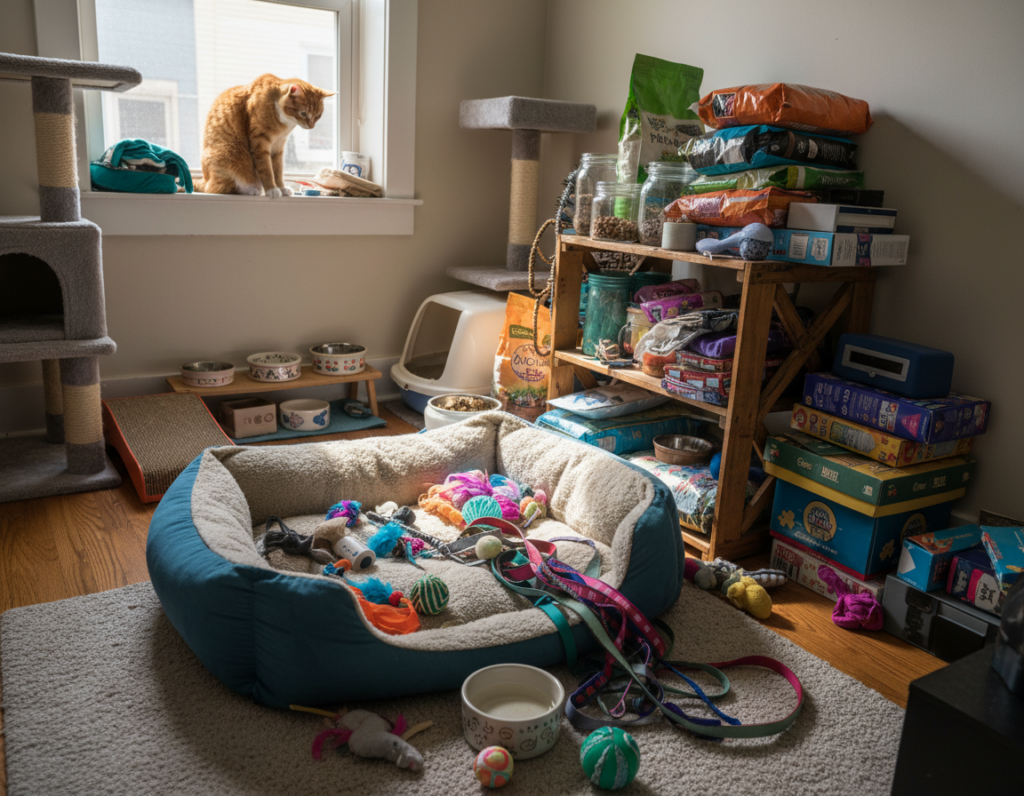
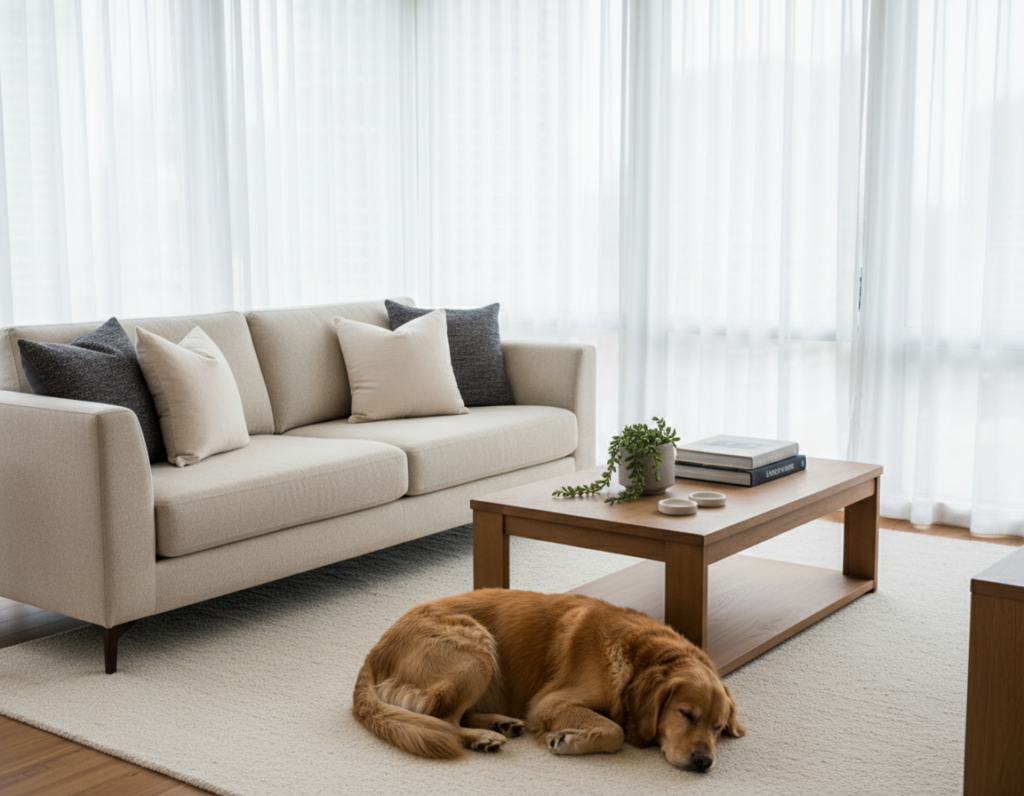
Tilden Brighton notes that her cat Manny often announces her pet life before she does. Visitors spot the playful feline and then notice how tidy the rooms stay.
Maintaining a clean house in a tight living space takes simple, steady habits. A few targeted steps cut down on hair, dander, and lingering odors.
Brighton says living with a cat does not force homeowners to choose between comfort and cleanliness. With a short daily routine, the home stays fresh and welcoming for guests.
Focus on hotspots where fur gathers: soft furniture, rugs, and entry areas. Regular quick tasks make a big difference in overall upkeep.
Understanding the Impact of Cats on Home Cleanliness
Natural feline habits shape the places in a home that need the most attention.
Feline shedding and dander are normal and unavoidable. A consistent routine helps manage loose fur and microscopic particles that settle on furniture and fabrics.
Shedding and Dander
Regular grooming and targeted vacuuming reduce visible fur and lower airborne dander. Professional solutions can remove embedded particles that simple tools miss.
Territorial Messes
Territorial behaviors like scratching often focus on textured surfaces, according to PubMed Central. This can damage furniture and create concentrated mess in certain areas.
- Designate a few zones to contain activity and protect valuable pieces.
- Provide scratching posts and durable covers to limit surface wear.
- Address odor early to keep the house feeling fresh and inviting.
Bottom line: Recognizing patterns of behavior lets a cat owner target efforts and maintain a clean house without stress.
Essential Apartment Cleaning with Cats Routines
A few focused tasks each day keep furniture usable and living spaces tidy. A simple cat routine split into short steps prevents hair from accumulating and cuts time spent on deep work.
Protect surfaces by using washable furniture covers on sofas and chairs. These covers save time and extend upholstery life while letting pets lounge freely.
- Set a morning and evening quick sweep to catch loose fur and dander.
- Rotate and wash furniture covers weekly to keep the house smelling fresh.
- Adopt a short daily cleaning routine that targets high-use spots.
Professional habits mean scheduling a regular deep clean and grooming sessions for the pet. These habits help keep the home healthy and reduce allergens over time.
Implementing these practical tips builds a reliable routine. The result is a tidy home that supports a happy pet and helps owners keep clean surfaces with less effort.
Managing Litter Box Tracking and Odors
Smart placement and the right accessories keep litter contained and odors low.
Daily control starts with a good litter mat and a quick sweep. Tilden Brighton uses the All-Absorb litter mat to trap granules before they scatter into living areas. A well-placed mat reduces tracking and saves time each day.
Litter Mat Solutions
Choose a textured litter mat that catches loose granules underfoot. Place it just outside the box to intercept particles as the kitty exits.
Vacuum the area around the mat daily. This keeps the surrounding floor and nearby furniture free from stray litter.
Disguising the Box
Hiding the box in a piece of functional furniture improves room flow. The Merry Products cabinet-style cover doubles as accent furniture while keeping the litter area discreet.
Proper Disposal Methods
Use single-use plastic bags for scooped waste and seal them tight. This prevents odor and makes trash runs easier.
For lingering smells, sprinkle Arm & Hammer Pet Fresh powder on carpets near the box; it neutralizes odor in about 15 minutes.
- Tip: Spend a few minutes daily on these tasks to maintain a clean house and a fresher home.
Effective Strategies for Removing Pet Hair
A weekly brush can change how much hair ends up on furniture and floors. Regular grooming reduces loose fibers before they migrate into fabrics.
Regular Grooming Sessions
Tilden Brighton uses the Hartz Groomer’s Best combo brush on Manny at least once a week to remove loose hair. This simple step lowers shedding and helps keep the home feeling fresher.
For heavy spots, a professional-grade lint tool helps finish the job. The FURemover pet hair removal lint brush works well year-round on upholstery and throws.
“A consistent grooming routine is the most effective way to keep a clean home while minimizing the presence of feline hair.”
- Brush weekly with a combo tool to cut shedding at the source.
- Use a lint brush on furniture after grooming to catch stray strands.
- Schedule professional coat care twice a year for deep fur control.
Prioritizing the cat’s coat health reduces time spent on surface maintenance and keeps fabrics in better condition. Small, steady steps add up over the week and year.
Maintaining Furniture and Fabric Integrity
Acting quickly after spills and accidents prevents permanent damage to fabrics. Cotton towels work best because they are about 91% cellulose, so they attract and hold water fast.
For organic stains like urine, apply a small amount of 3% hydrogen peroxide to a cotton towel and blot gently. This method treats the spot while protecting the weave and color of most upholstery.
Protective covers remain the easiest way to guard furniture from hair and daily wear. High-quality furniture covers save time and let the household keep a polished look.
“Using cotton towels and a mild peroxide solution keeps fabrics intact and reduces long-term damage.”
- Inspect upholstery regularly and remove embedded hair before it settles into fibers.
- Use covers and spot-treat promptly to maintain the home’s appearance.
- Schedule professional care annually to preserve fabric strength and finish.
Deep Cleaning Techniques for Small Spaces
Targeted steam and suction methods restore upholstery and rugs that regular tidying cannot fully refresh. A top-to-bottom approach helps find trapped hair, dust, and odors in every area of a small home.
Steam Cleaning Upholstery
Steam loosens deep-seated mess in fabric fibers and can refresh furniture without harsh chemicals.
Use water-based steam on suitable upholstery and follow manufacturer instructions. Short passes and moderate heat remove dirt and reduce allergens while preserving fabric integrity.
Seasonal Deep Cleaning
Deep cleaning once or twice a year is essential to reach spots that routine work misses. Spend a few minutes each month on spot tasks to reduce build-up between sessions.
- Vacuum under and behind large pieces to pull out embedded cat hair and dust.
- Choose a vacuum that delivers 150–200 CFM to lift embedded hair and dander from thick carpets.
- Consider professional deep cleaning to reset the space and extend the life of furniture.
“A combination of steam and high-CFM vacuuming brings long-term benefits for a pet-friendly home.”
Optimizing Air Quality in Your Home
Simple air habits can cut airborne pet particles and make a home feel fresher fast.
Use a vacuum fitted with a HEPA filter to capture tiny dander and fur before it settles. A HEPA unit traps microscopic particles and improves indoor air quickly.
Replace HVAC filters on schedule so hair does not clog vents. Regular filter swaps support consistent airflow and reduce dust buildup.
Choose non-toxic products when treating surfaces and odors. Safe formulas remove lingering pet odor and protect the household member and the animal.
- Dust surfaces twice weekly to stop dander from accumulating.
- Run an air purifier or odor-neutralizer in high-use rooms.
- Keep groom sessions regular to limit loose fur in living areas.
“Prioritizing these habits creates a fresher, breathable space for both owner and cat.”
Organizing Pet Supplies for a Tidy Environment
A tidy supply system keeps pet essentials in reach and reduces daily clutter. It also shortens the time spent on routine tasks so owners can enjoy their home more.
Storage solutions for toys and tools help separate play items from maintenance gear. Use open bins for toys so the cat can access favorites, and label closed bins for durability items.
Designated cabinets work well for bulk items such as cat litter and extra litter box liners. A single cabinet keeps floors and furniture clear of scattered bags and boxes.
- Keep a small bin near the box for scoops and brushes to speed daily cleaning.
- Store backup cat litter in a sealed container to control dust and odor.
- Assign one shelf for grooming tools so they are easy to grab at any time.
“Professional organization of pet supplies makes daily maintenance faster and keeps living areas neat.”
Choosing Safe and Non-Toxic Cleaning Products
Safe, non-toxic solutions are a key part of responsible household care for pet owners.
Choose fragrance-free, pet-safe items that remove dirt and odor without harsh chemicals. Many standard sprays and concentrates contain ingredients that can harm a feline if residues remain on surfaces.
Always read labels and avoid products listing bleach, phenols, or essential oils known to be toxic to small animals. Store supplies in a locked cabinet so curious cats cannot access them.
- Pick fragrance-free formulas labeled pet-safe or non-toxic.
- Rinse surfaces after treatment if label recommends it.
- Keep all supplies secured and out of reach.
For guidance on trusted options, consult a reputable resource on pet-safe cleaning products. Prioritizing non-toxic choices helps protect both the household and the animal.
Conclusion
A steady routine turns scattered fur and litter into a manageable part of daily life.
Consistent grooming, timely litter box care, and using a litter mat cut down on tracking and odor. Pair those steps with a good vacuum and quality products to protect furniture and reduce shedding.
Seasonal deep cleaning and furniture covers extend fabric life and restore freshness. These tips make it easier for any cat owner to keep clean house and enjoy a tidy home.
In short, small daily habits plus occasional deep cleaning create a reliable way to control mess, protect furniture, and keep a happy feline in the living space.