Many devoted owners seek the best way to make pet life more comfortable at home. Small, unused nooks often hide great potential for a practical setup that blends with living room design. A well-chosen bed or tree can turn an ignored spot into a favored nap place.
They can add wall shelves and storage for toys to keep the room tidy while offering climbing options. Thoughtful choices in color and material help the setup feel intentional and match existing decor.
With smart planning, even a tiny house gains vertical space that satisfies natural instincts. The result is pet gear that enhances the look of the room, not just fills it. This guide shows practical steps to transform overlooked areas into functional, stylish spots for pets.
Identifying Your Interior Design Aesthetic
Knowing the home’s aesthetic helps match accessories to materials and keeps spaces unified. This step makes selecting pieces easier and avoids visual clutter in living rooms.
Minimalist and Japandi favor clean lines and natural wood. Choose streamlined beds and low-profile posts that echo the room’s calm. Metal accents should be subtle to maintain an uncluttered look.
Minimalist and Japandi
- Pick warm wood tones and simple shapes.
- Limit patterns; focus on texture and grain.
- Use pieces that double as decor, not clutter.
Boho and Natural
Boho and Natural welcome layered textures like woven fabric and rattan. These materials feel cozy to cats and blend with plants and art in the room.
“Match accessory materials to room finishes for a seamless look.”
- Mix soft textiles with organic materials.
- Coordinate metal or wood accents with existing wall and floor tones.
- Keep a cohesive palette so beds and posts read as part of the design.
Innovative Cat Corner Furniture Ideas for Modern Homes
Sleek, geometric designs transform tight spots into high-performing play and rest areas. Modern pieces from brands like Hepper and Tuft + Paw marry architectural form with practical function. They fit cleanly into a room and support active pets without disrupting decor.
Install a vertical cat tree in a corner to maximize height and free up floor space. Wall-mounted shelves and narrow posts create connected pathways for climbing and perching.
These solutions make small homes feel larger by using the wall as usable territory. A tall tree or staggered shelves gives cats secure spots to observe windows or guests.
- Choose modular pieces that look like sculptural accents.
- Pick materials that match room finishes for cohesion.
- Prioritize stability so posts and trees stay safe when used.
“Design-forward pieces let pets have their own stage while keeping the home stylish.”
The Double Function Principle for Small Spaces
Smart, dual-use selections turn limited floor space into practical storage and elevated resting spots. This principle asks that every piece serve household needs and provide cats with climbing or resting options.
Floating shelves as walkways
Floating shelves create an elegant wall pathway. Install staggered wood shelves to form a safe climbing route that reads like art.
Use narrow platforms at varied heights so pets can move between levels without bulky structures on the floor. This keeps rooms open and visually calm.
Ottomans with hidden interiors
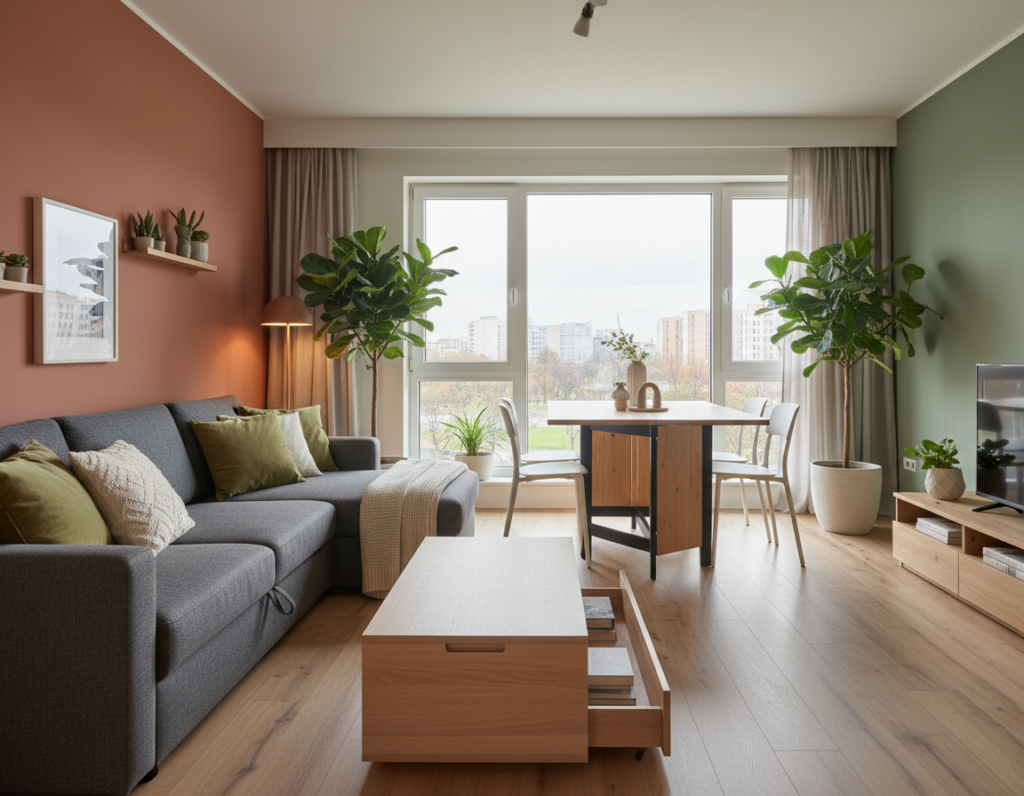
Choose ottomans that open to reveal storage while offering a plush top that doubles as a bed. They hide toys, blankets, and litter tools to keep rooms tidy.
Durable fabrics and low profiles make these ottomans a stylish option that supports naps and storage in one piece.
“Double-function pieces let households stay organized and give pets cozy, elevated spots without sacrificing style.”
- Prioritize stable, well-anchored shelves for safe climbing.
- Match wood tones to the wall to keep a cohesive look.
- Pick storage ottomans that complement the room and offer an inviting bed surface.
Coordinating Color Palettes with Your Decor
Choosing a coordinated palette helps pet items read as part of the room instead of stand‑alone accessories.
Brands like Inicio, Hepper, and Tuft + Paw offer cat furniture in curated neutrals that match modern interiors.
Neutral tones — cream, stone, warm grey — blend with sofas and rugs and keep a space calm.
Pick a bed or beds that echo existing upholstery. Matching tones to the sofa makes the pet area feel intentional.
- Coordinate the piece with wall and floor colors to keep a tidy, cohesive look.
- Use high‑quality materials such as powder‑coated metal or structured fabric to elevate the overall design.
- Consider a single accent tone if a bold pop will tie the area into the room.
Intentional color and material choices turn a standard pet area into a stylish feature that enhances the home’s look.
Designing a Vertical Cat Wall
A well-planned vertical setup converts a plain wall into a sculptural pathway that supports climbing and observing. It can provide needed vertical space and make the room feel intentional.
Planning for flow and balance
Start with movement in mind. Map how cats will travel from lower shelves to higher perches. Vary heights so each step feels natural and safe.
Use sturdy wood shelves and secure posts to form a reliable route. Brands like Catastrophic Creations, Fukumaru, and The Refined Feline offer modular systems that read like installation art.
- Plan a clear way between platforms so climbing is smooth.
- Mix textures and materials to add traction and visual depth.
- Include scratching posts to protect other upholstery and redirect energy.
- DIY builders can adapt standard shelves with added grip and anchors for a custom fit to the room.
“A balanced vertical design keeps pets safe while adding visual texture to the home.”
Choose finishes carefully. The right materials and color keep the wall looking professional and linked to the overall design of the room.
Essential Details for a Styled Feline Zone
A well-styled feline zone balances play, rest, and storage so the area looks intentional. Small details make the difference between clutter and a calm, usable place.
Use decorative storage to hide toys and keep the room tidy. A low-profile tray for food and water protects the floor and upgrades feeding time.
Provide both a cozy bed and a climbing option. Include a sculptural cat tree or mounted shelves so cats have varied spots to nap and observe.
- Storage: baskets or ottomans to hold toys and blankets.
- Feeding: trays that contain spills and define the eating area.
- Climbing: a mix of shelves and trees for vertical play and security.
Simple DIY touches—framed art above the area or a coordinated color accent—signal that the setup was designed with intention. Choosing matching furniture and finishes keeps the space cohesive and stylish for both people and pets.
Creative Storage Solutions for Cat Toys
Smart storage keeps toys off the floor and makes the living area feel calm. Woven baskets, canvas totes, and lidded bins tuck playthings out of sight while staying easy to reach at play time.
Use vertical solutions to save floor space. Mount a few narrow wall shelves to hold brushes, treats, and a rotating selection of toys. This DIY shelf project keeps essentials organized without cluttering the room.
Designate a spot for climbing gear and trees so posts and cat trees sit neatly together. A small zone for these items prevents them from spreading across the room and makes cleanup fast.
- Store less-used toys in a labeled bin and rotate them weekly to keep cats engaged.
- Place a shallow tray near feeding stations to contain bowls and grooming tools.
- Fit a slim basket into unused corners to maximize space without blocking traffic.
“Effective storage is the backbone of a tidy, cat-friendly home.”
Good storage systems reduce stress for owners and pets. With simple bins, mounted shelves, and thoughtful placement, a well-organized area stays stylish and functional.
Integrating Greenery and Art into Pet Spaces
Integrating greenery and curated prints brings texture and life to a dedicated pet area without sacrificing style. Live plants and framed art make the zone feel intentional and part of the room’s story.
Choose non‑toxic species such as spider plants, Boston ferns, calathea, and parlor palms for safe, lush accents. A large statement plant placed near a wall creates a natural frame for mounted shelves and perches.
Hanging art above a climbing route anchors the composition and signals thoughtful design. Art ties the vertical elements to the rest of the house so the area reads as decor, not a staged pet corner.
- Greenery: select safe plants that add texture and height.
- Placement: position a bold plant near the wall to visually unite the setup.
- Balance: pair art with functional pieces so cats enjoy stimulation and owners keep tidy storage for toys.
“Combining plants with practical furniture creates a stimulating environment that supports feline physical and mental life.”
Conclusion
Small, intentional changes can transform an overlooked wall into a usable stage for rest and observation. A thoughtful plan uses vertical routes, soft perches, and clear storage to add function and calm to a tight space.
Creating a cat-friendly home is about balancing climbing needs and restful spots with the household’s design. The best cat setup fits the home’s scale and the pet’s personality, not the other way around.
Start small: add a few shelves or a dedicated bed and watch how your pet uses the area. For practical tips on crafting a cohesive spot, see this guide on how to design a pet corner that blends comfort and style.