Small home details can shape how much a companion moves and plays during a rainy day. This introduction looks at how layout, light, and noise affect indoor pet activity and overall well-being.
Maintaining consistent movement is essential for long-term health and emotional balance. Recognizing early signs of boredom prevents destructive habits that often show up when pets spend the day confined.
Hunterdon Hills Animal Hospital, located at 411 US Highway 22 East, Whitehouse Station, NJ 08889, focuses on practical ways to keep pets engaged. Their team helps owners see which environmental factors change daily movement and mental stimulation for each furry friend.
When the weather limits outdoor time, a structured space makes a big difference. Simple adjustments inside an apartment can help sustain energy, reduce stress, and protect health.
Recognizing the Need for Increased Indoor Pet Activity
Owners should watch for subtle behavior changes that signal a need for more daily engagement. Early recognition helps prevent stress and lasting habits that hurt a companion’s health.
Signs of Boredom in Pets
Common signals include pacing, excessive vocalizing, chewing furniture, or sudden restlessness. These signs often show when a dog has low energy outlets.
- If a dog seeks constant attention, it may be bored or anxious.
- Unusual vocal behavior often reflects unmet stimulation needs.
- Destructive chewing or toileting can result from prolonged understimulation.
“Even 15 minutes of focused play can make a significant difference in mood and fitness.”
Impact of Weather on Daily Routines
During August in Central NJ, rainy spells can last several days and limit outdoor time for your dog. Those weather patterns force owners to rethink how they keep pets engaged.
Practical steps include scheduling short, structured sessions each day and offering treats in puzzle toys for mental work. Veterinary teams advise at least 15 minutes of focused play to help maintain energy and overall health.
For more ideas on how to adapt routines and rainy day enrichment ideas, consult the linked guide for safe, vet-approved options.
Optimizing Apartment Layouts for Movement
Reconfiguring a small living room can turn unused space into a secure area where a dog can move, learn, and burn energy. A dedicated play area protects furniture and creates a clear spot for games and training.
Create a simple obstacle course with boxes and low household items to improve a dog’s agility skills. A hallway makes a great fetch lane and gives dogs a safe way to sprint without risking slips.
Pet Evolution offers tools and advice to help keep dogs fit when the weather limits outdoor time. Hiding a treat in different rooms or using puzzle food games encourages natural foraging and supports mental health.
- Designate one area for toys and short training sessions.
- Use soft barriers to define a course without damaging walls.
- Rotate toys and treats to keep playtime fresh.
“Short, daily sessions in a small, organized space yield better fitness and behavior outcomes than rare, long outings.”
Utilizing Vertical Space and Furniture for Enrichment
Clever use of height and furniture helps smaller homes offer more places to climb, hide, and rest. These options boost physical movement and mental stimulation without needing extra square footage.
Benefits of Cat Trees and Shelving
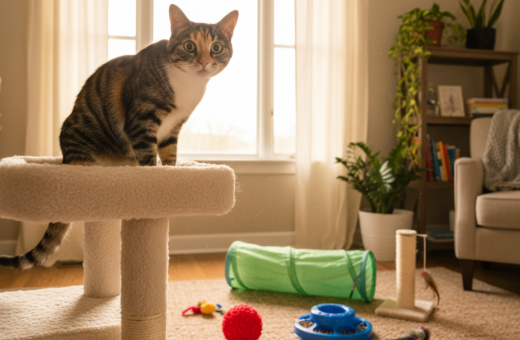
Cat trees and mounted shelving give a safe route for a cat to jump, observe, and nap above floor level. This reduces boredom and gives a steady outlet for natural climbing instincts.
- Install sturdy shelves to create a vertical trail for climbing and exploration.
- Use stable cat trees with multiple platforms so a cat can jump and rest safely.
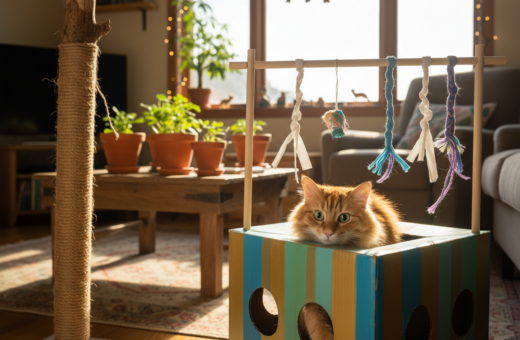
- Repurpose cardboard boxes into tunnels or hiding spots to spark curiosity.
- Introduce puzzle toys for dogs to challenge their minds and slow eating when offering treats.
- Rotate a selection of quality toys to keep dogs interested and prevent destructive habits.
“Simple vertical upgrades can change how companions move and engage throughout the day.”
Integrating Interactive Technology and Toys
Interactive devices and food-based puzzles create engaging routines that support a dog’s health and mood. Simple tech and thoughtfully chosen toys offer reliable ways to keep dogs mentally and physically busy during a quiet day.
Puzzle Feeders for Mental Stimulation
Puzzle feeders slow eating and force a dog to solve problems to access food. This builds skills, reduces anxiety, and extends meal time into a focused training session.
Automated Motion Toys
Automated motion toys mimic prey and encourage chase instincts. They are especially good for cats and for dogs that enjoy quick bursts of play.
“Short, automated play sessions can replace several minutes of supervised exercise.”
Scent Games and Foraging
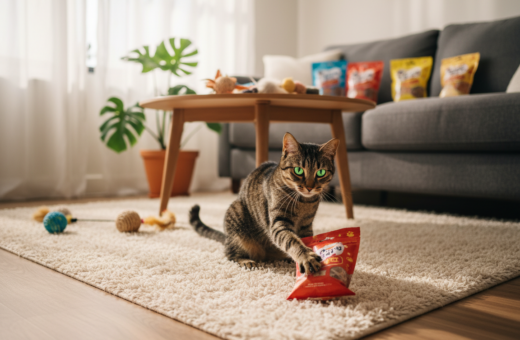
Scent games hide treats around the house to make a dog use its nose. This low-impact game provides strong mental stimulation and supports natural instincts.
Tip: Rotate a few quality toys and add puzzle mats or rope toys for tug to keep sessions fresh and fun. Visit us today to learn how interactive training and specialized mats can transform a small house into an active, healthy space for pets.
Creating Dedicated Zones for Training and Play
Designating a compact training zone makes it easier for a dog to understand expectations. A clear area signals when training time starts and ends.
Place a mat, a few durable toys, and a treat bowl in the zone. Use soft barriers or rugs to define the area.
Keep one corner free for a small obstacle course. A hallway or cleared living space works well so dogs can sprint without knocking over furniture.
- Rotate toys weekly to keep interest high.
- Run short, consistent sessions to build listening skills and support overall health.
- Teach one new trick per session and reward with a small treat.
Setting a zone for each game helps pets learn boundaries and expected behaviors. Over time, a defined training area reduces stress and makes daily routines smoother.
“Short, focused sessions in a dedicated space produce steady progress and better manners.”
Monitoring Behavioral Cues and Health Indicators
Watch for steady shifts in behavior; small changes often signal health or stress issues. Tracking how a dog eats, sleeps, or uses a favorite toy gives owners useful clues.
When to consult a veterinarian
Contacting Hunterdon Hills Animal Hospital
If a dog or cat shows lethargy or sudden appetite changes, call Hunterdon Hills Animal Hospital at (908) 923-7728 for a prompt evaluation.
- Lethargy or appetite loss: These can indicate infection, pain, or metabolic issues.
- New anxiety or boredom signs: Sudden pacing, excessive vocalizing, or destructive play may reflect health or behavioral problems.
- Monitor movement and play: Simple games like fetch or a brief puzzle session help gauge energy and coordination in real time.
Veterinary teams offer comprehensive wellness support to keep a best friend active year-round. They can recommend training, treats, mats, or puzzle tools that fit the house and weather.
“Early detection and targeted care help preserve mobility, mood, and the human–animal bond.”
For a deeper review of clinical signs and monitoring methods, see this clinical resource: behavioral and health monitoring guide. Call (908) 923-7728 today to discuss ways to keep dogs and cats healthy, active, and engaged despite changing weather.
Conclusion
,Small, regular efforts yield big results for a dog or cat’s behavior and wellbeing. Establish short, consistent sessions that mix movement with problem-solving to keep a companion engaged.
Use vertical solutions, focused training zones, and thoughtful toys to turn a limited space into an enriching home. Monitor behavioral cues closely and adjust routines when energy or mood shifts appear.
When unsure, seek professional veterinary guidance. A clinician can tailor enrichment and health plans to each animal’s needs and help prevent long-term problems from low stimulation or skipped care.