Introducing a simple game can shift a cat’s day in small but powerful ways. Hiding a tiny snack inside a cardboard box or under a paper cup prompts natural search instincts. This boosts mental activity and reduces boredom while at home.
One easy way is to tuck a kibble piece into a rolling ball toy. Another is to drop a morsel inside a Dixie cup to start a short play session. These moves turn feeding into a gentle, rewarding game that encourages movement and problem solving.
Many owners notice calmer behavior and more confidence when mealtime becomes active. For ideas on enrichment and interactive puzzles, see this helpful resource on why cats act strange after changes in routine: mental enrichment and puzzle toys.
Understanding the Feline Predator Instinct
A typical day for a house cat cycles between searching, eating, grooming, and napping in short bursts. This pattern is rooted in predator behavior and shapes how a pet responds to play and meals.
The Importance of Mental Stimulation
Mental stimulation keeps a cat engaged and reduces boredom. Indoor cats that lack this spark can show stress or destructive habits.
Short interactive sessions before food help the animal feel accomplished. Experts recommend at least five minutes of play to mimic a successful catch.
Mimicking the Natural Hunting Cycle
The natural cycle includes locating, capturing, killing, and eating prey as a normal part of life. Recreating these steps with toys and puzzles satisfies instincts and provides exercise.
- Match play times to regular meals so the pet expects activity at set times.
- Use moving toys and food-dispensing devices to simulate the wild chase.
- Consistent routines help transition from high-energy play to calm, post-mealtime rest.
Implementing a Successful Treat Hunt for Cats
Start simple: hide a few kibble pieces in shallow paper Dixie cups to spark curiosity and play.
Beginner-friendly setup: place a cup on a low shelf, a sunny windowsill, or inside a cardboard box. Use small pieces so the cat has to work to get each reward. This encourages natural searching and adds gentle exercise to the day.
Feed at least three small meals daily to mimic instinctual patterns. Combine that schedule with puzzle feeders or slow-eating bowls to prevent gulping and reduce bloat.
- Start with paper cups and a few kibble pieces in easy-to-reach places.
- Hide cups in different areas of the home to encourage exploration.
- Use puzzle-style feeders to slow eating and boost mental work.
- Keep food accessible so the cat succeeds and stays motivated.
For step-by-step ideas and variations, see this guide on how to help your indoor cats hunt: help indoor cats hunt.
Utilizing Puzzle Feeders and DIY Alternatives
Puzzle feeders and simple DIY toys give a cat steady challenges during mealtime. These tools turn feeding into a game that boosts mental stimulation and exercise in short bursts.
Commercial Puzzle Toys
Popular options include Nina Ottosson feeders like Melon Madness and Buggin’ Out. The Buggin’ Out has 16 hidden compartments to keep a smart cat occupied during daily meals.
The Egg-Cersizer ball lets a kitty roll the ball until kibble spills out. The Hunt N’ Swat Treat Tumbler adds an unpredictable feather to raise interest.
Creating Homemade Enrichment
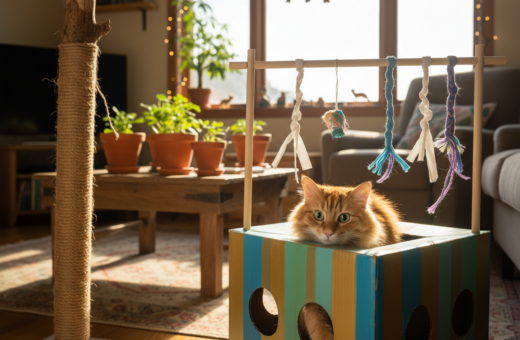
A simple egg carton or cardboard box hides pieces of food and works as an effective DIY puzzle. These low-cost solutions still satisfy hunting instincts and are easy to rotate.
Varying the Game Environment
Move puzzles and boxes to different areas of the home and swap toys across times of day. Rotation keeps the game fresh and maintains long-term interest in food-based play.
- Rotate puzzle feeders every few days.
- Mix commercial toys with DIY options.
- Match play to regular meals to mimic the wild cycle.
Safety Precautions for Interactive Play
Safety checks before play make active sessions more fun and less risky. Owners should always inspect toys and remove loose parts before letting a cat join a session.
Supervision is key. New puzzle toys and balls can have small components that a curious animal might chew off. Keep string, hair ties, rubber bands, and similar items well out of reach.
Managing Choking Hazards
Wait until food and treats are fully swallowed before starting another play period. A running cat with half-chewed pieces in its mouth can choke.
- Inspect toys regularly and retire items with cracks or missing parts.
- Supervise initial sessions with any new toy or puzzle to spot hazards early.
- Remove small objects like rubber bands and string from play areas.
- Choose durable toys and a correctly sized treat ball so pieces don’t slip free.
Managing these risks keeps playtime safe and enjoyable. Simple steps protect the pet and support the cat’s instincts to explore without danger.
Conclusion: Nurturing a Happy and Enriched Cat
, Small puzzles at regular times reshape behavior and boost daily activity. Introducing a simple game around mealtime honors a cat’s wild instincts and adds gentle exercise each day.
Using puzzle feeders and hiding small bits of food in a box or toy gives indoor cats steady mental stimulation. This method turns meals into a playful routine that reduces boredom and stops destructive habits.
Consistency matters. Keep play tied to set meals and rotate toys. Over time the pet grows calmer, more confident, and more engaged at home.